

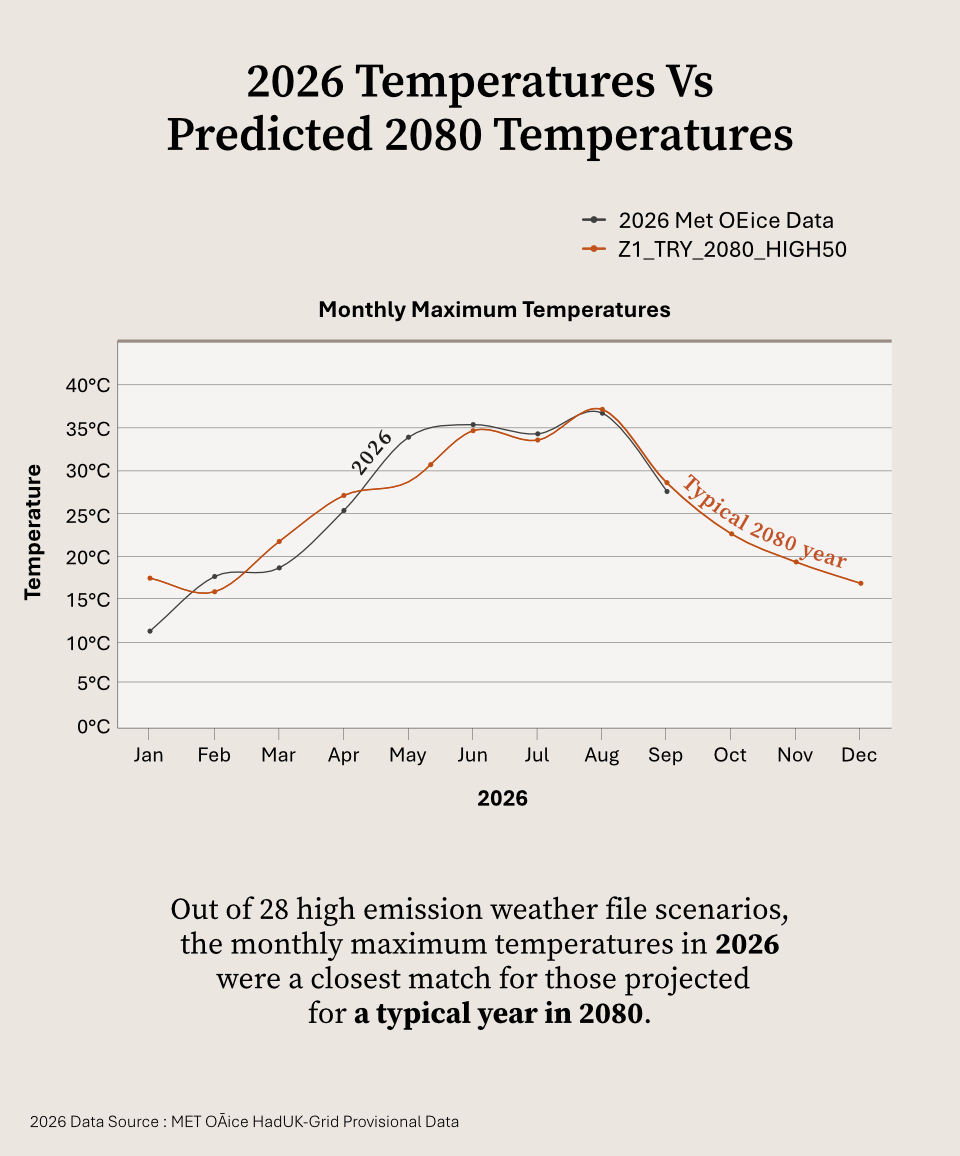
At HTA, our Sustainable Futures team compared this year’s temperature data with CIBSE’s future weather files. The results suggest that monthly average and maximum temperatures in 2026 were closest to those projected for a typical year in 2080.
Summer 2026 in the UK is on track to be the hottest on record:
• 40 days above 30°C, exceeding the previous record of 34 days,
• Temperatures of 35°C or higher in four months, rather than two,
• A record number of “tropical nights”, when temperatures remain above 20°C.
The UK Health Security Agency announced 2,877 heat-related excess deaths in the May and June heatwaves alone - double the figure for the whole of summer 2025. Meanwhile, the London Ambulance Service said it received more than 53,000 emergency calls leading it to deploy an extra 600 ambulance crews to respond to heat related medical emergencies. Citizens Advice found that 72% of people felt uncomfortably hot in their homes, with 7% experiencing direct health concerns. Modern housing developments often feature pipes from portable air-conditioners hanging out of windows, alluding to the conditions inside.
The evidence shows overheating in UK homes is escalating from a comfort issue to a health risk.
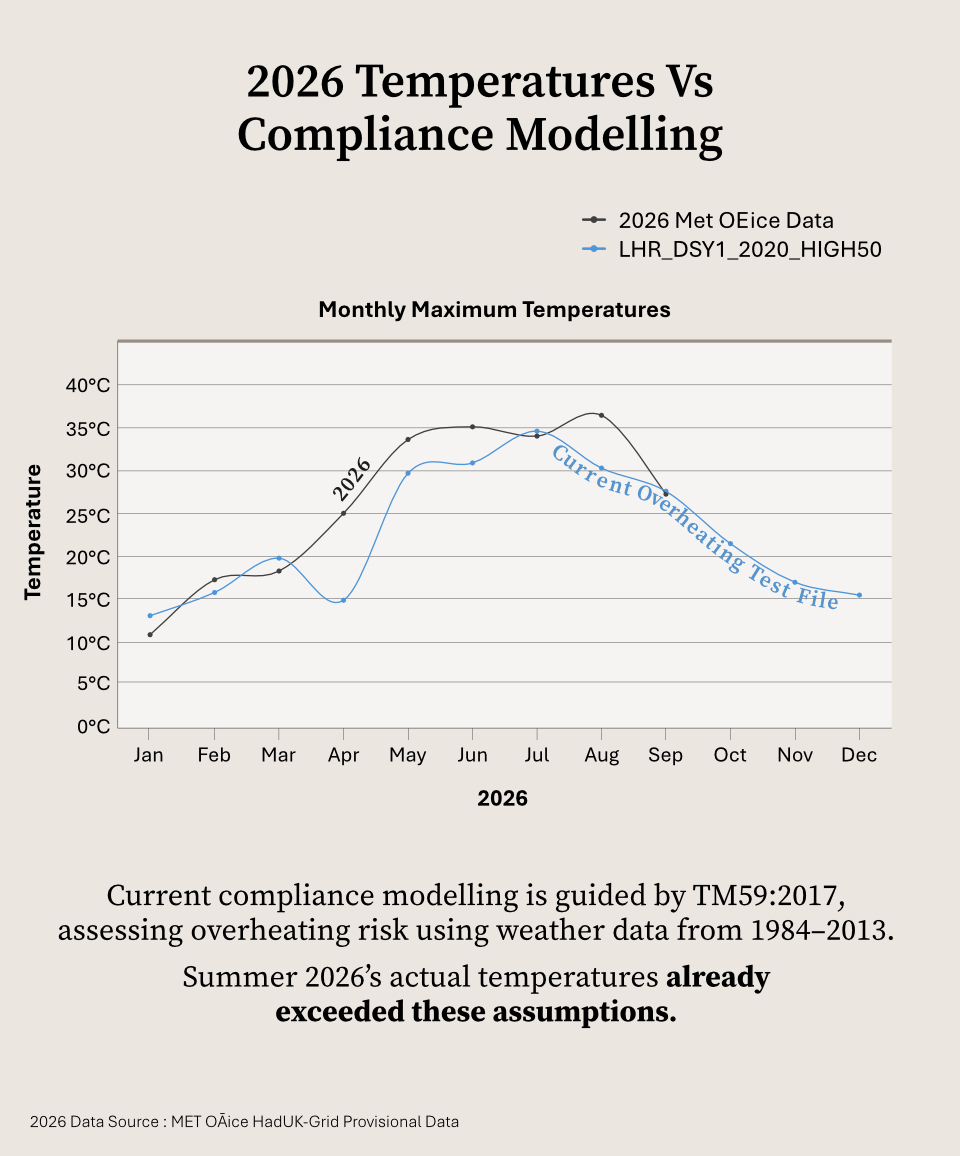
Current compliance modelling is guided by TM59:2017, assessing overheating risk using weather data from 1984-2013. Summer 2020's actual temperatures already exceeded these assumptions. Earlier this year, CIBSE released a new update to TM59 and updated weather files requiring assessment against a moderately warm 2050 summer under high emissions. There is no current pathway for when Part O of Building Regulations will adopt this.
We compared provisional Met Office data from eight London boroughs against 28 high emissions scenario weather files. Our analysis shows that 2026 most closely resembled a long warm spell in 2050 and a typical year in 2080.
We need urgent action and a radical perception shift to design our homes for a 2026 summer as our new climate norm.
Rethinking design fundamentals
Before central heating and cooling, a buildings vernacular responded to its climate and context, making use of thermally massive structures and external shading.
Passive means of overheating mitigation must become a requirement in our planning system - not only to protect residents' health, keep down fuel bills and to improve the countries energy security and heat resilience.
Following this year’s extreme summer, would you consider the risk of overheating when buying or renting your next home? Would you intentionally choose a home oriented away from the sun or one that has external shading?
In our follow-up articles, we'll discuss our research and work on external shading devices and how we think policy should respond to reflect an increasingly warmer UK climate.


