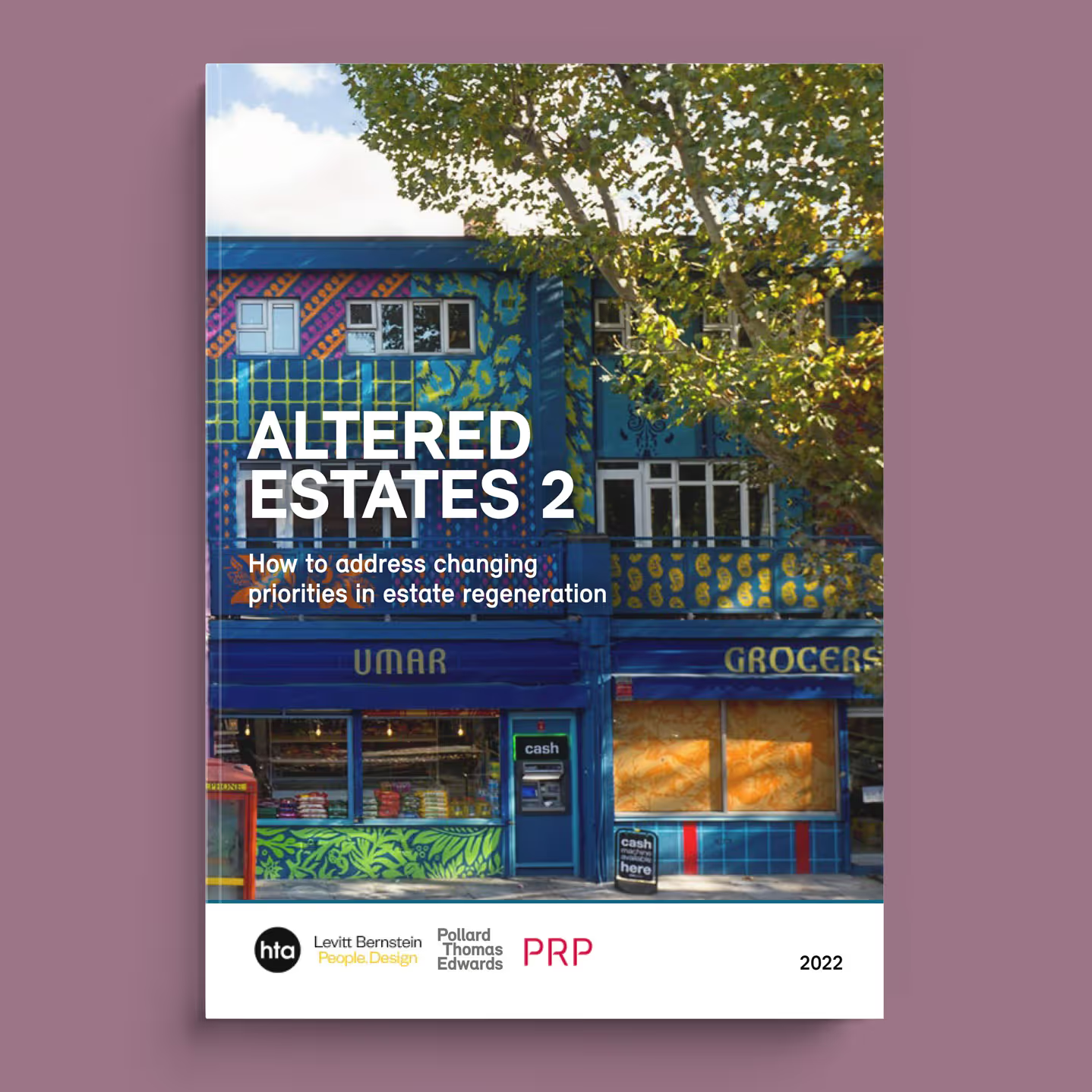
Regeneration of our cities and towns and increasing supply of new affordable housing remains as urgent, and contentious, as ever. This report, which brings fresh new insight and advice to the new pressing issues facing housing providers today, including the transition to net zero, building safety and effective community engagement, could not be timelier.
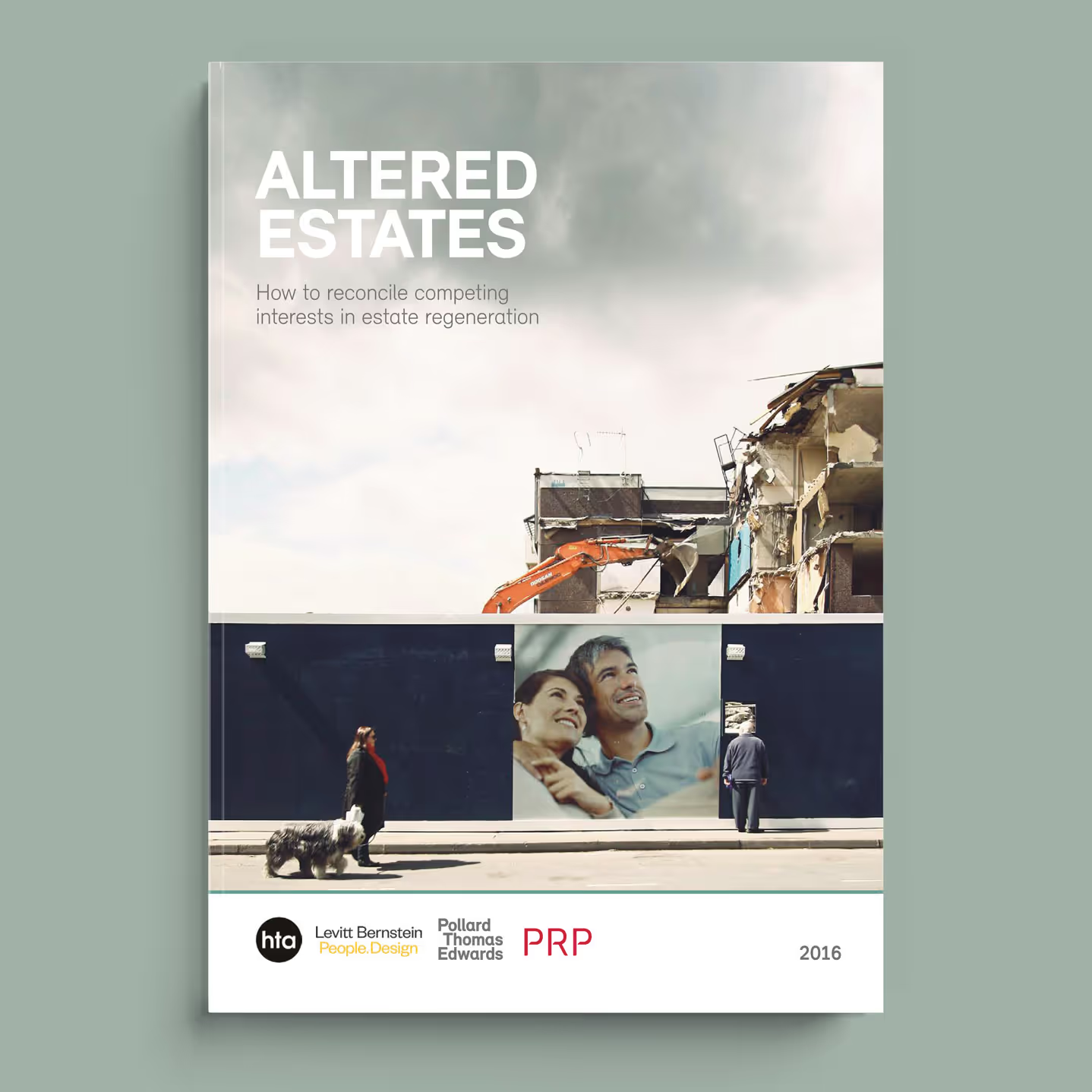
As its name suggests Altered Estates 2 builds upon an earlier report written in 2016 by the same four leading housing practices and experts in regeneration.
At the time of its publication, regeneration policy was under a great deal of scrutiny. Government had been pursuing the potential to redevelop all run-down housing estates in London to much higher densities, substantially increasing the number of private homes on publicly owned land. Despite good intentions, the approach was greeted with consternation by experts as it was perceived it could displace or marginalise existing communities, and lead to poor super-dense, urban design outcomes.
It took an independent panel of advisers, chaired by Lord Heseltine, to develop a strategy that put local people at the heart of estate regeneration and to draw on some well-established tenets of best practice. Altered Estates contributed positively to a sensible and respected outcome.
The national policy it helped shape, both in the government’s Estate Regeneration National Strategy and for London, Better homes for local people, The Mayor’s Good Practice Guide to Estate Regeneration, means it remains just as relevant today as it did when it was written.
The original report, Altered Estates put the needs of existing communities at the centre, involve residents throughout the process and advocated a design approach, for new and refurbished development on estates, which would stand the test of time.
But while the underlying principles remain, much has changed since 2016. The Grenfell tragedy has led to a wholesale review of the sector, not just the building safety implications, but also the quality of design and construction and means of redress for occupants. There has been a renewed emphasis in the planning system on the design quality of new homes and places. Addressing environmental sustainability is centre stage through the introduction of new standards and a renewed interest in retaining rather than demolishing existing buildings.
It is time to revisit the original report to assess the implications these changes have on estate regeneration policy, especially in the national context. There is much more now to say on good practice – how to bring forward the voice of the community, the social benefits arising from regeneration, ensuring safety of residents before, during and after regeneration and how to address climate change and the pathway to net zero.
Sadly, investing in estate regeneration has not been a priority for successive central governments. Councils have had to rely on private sector investment to lead recovery. There is now a strong case for increasing public sector investment to deliver regeneration without recourse to hyper-dense development or poor pattern book housing solutions.
This report addresses the challenges. It offers recommendations for government, councils, housing associations, developers and consultants. It aligns with the government’s push for greater involvement by communities in shaping their built environment, for better quality outcomes, a focus on environmental sustainability and the natural environment, and on safety.
The report also aligns with the current focus on regenerating left behind places. It stresses that successful estate regeneration is about much more than providing more and better homes, and improving the physical environment. It is about a holistic strategy for improving people’s wellbeing and their economic prospects.
Download the report here
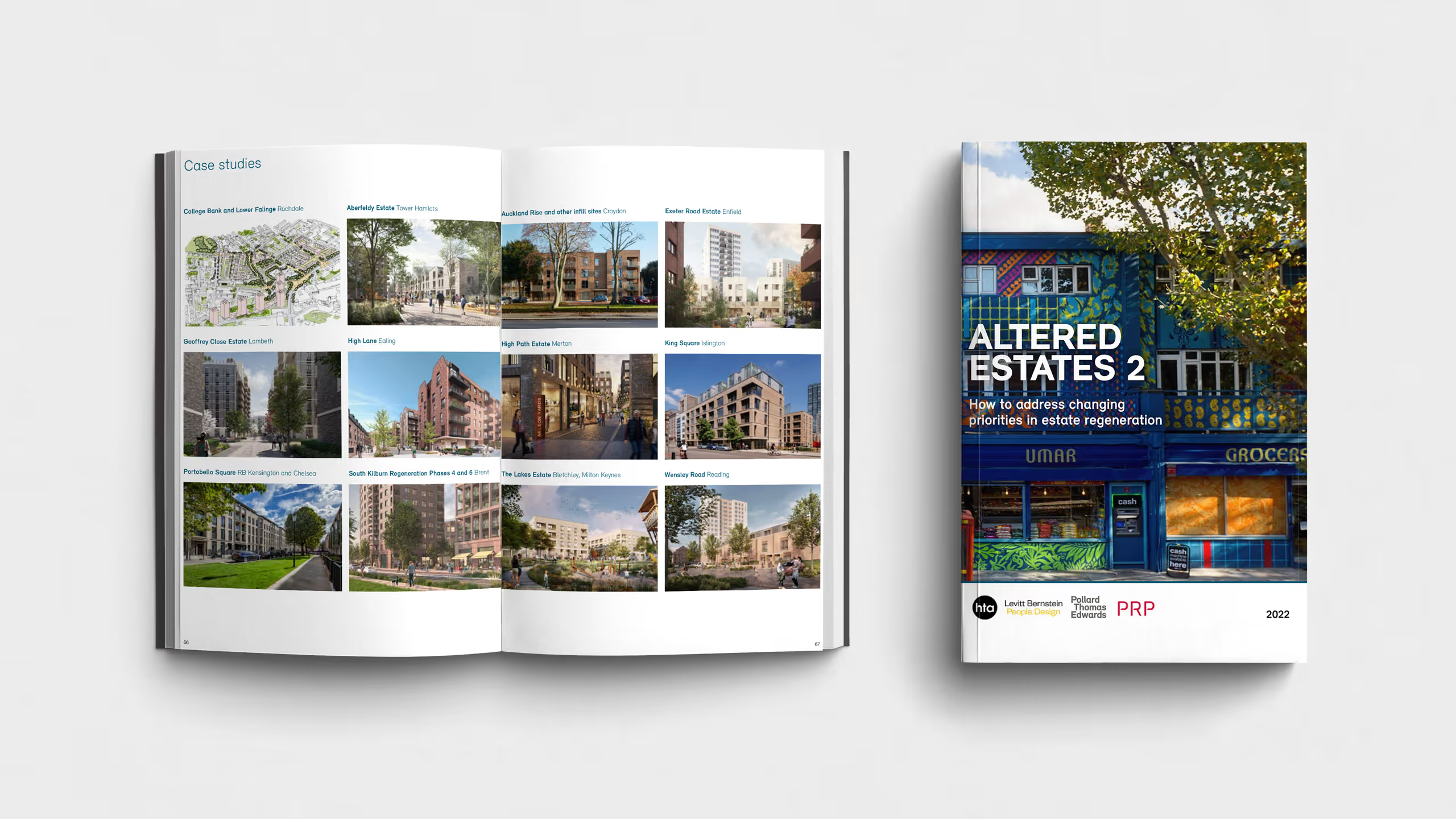
Please enter your details below to access your free PDF download.