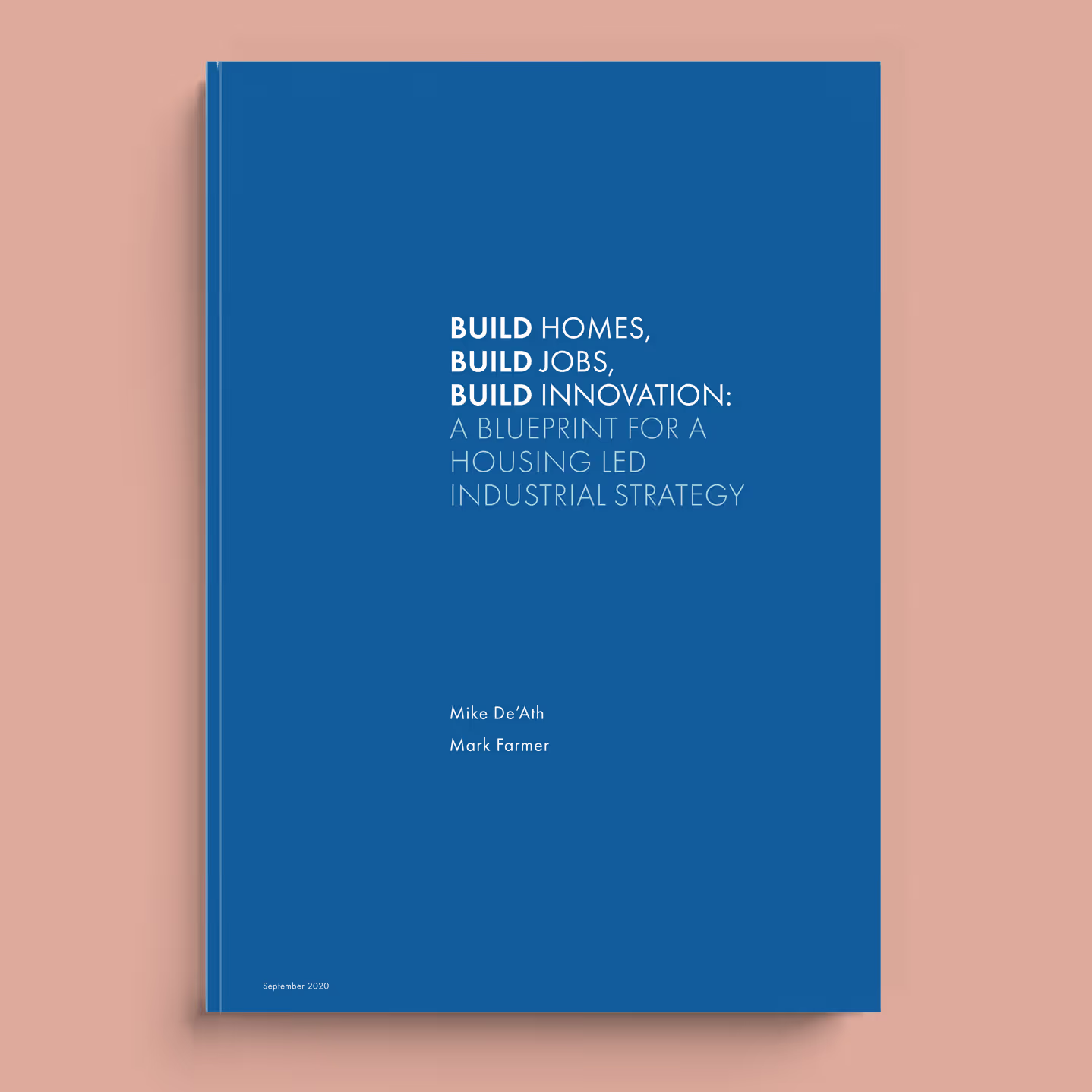
A new report has called on the Government and the housing industry to work together, to make the modular construction of homes the driving force for delivering the Government’s ‘build, build, build’ agenda to alleviate the UK’s housing crisis.
Following the Government’s recent planning white paper to reform the planning system, the new report – ‘Build Homes, Build Jobs, Build Innovation’ – points to how modern (including modular) methods of construction (MMC), which has high up-front investment costs, has struggled to become mainstream within the current planning system.
The proposed digitisation, pattern book and design code agendas set out in the recent planning white paper will give high quality modular construction its chance to become an increasingly viable and mainstream form of construction.
The benefits to UK plc would be tremendous.
Build Homes sets out how boosting the modular housing sector will help solve a number of the UK’s long-term structural challenges, including: the slow pace of housing supply, low productivity, unattractive and poor quality new-build homes, and the UK’s high carbon footprint.
Building modular homes is quicker, safer, more reliable and more environmentally friendly than traditional housing construction methods. In the current context, modular’s use of off-site factories means construction can continue, even during lockdowns and with social distancing measures in place.
The report has been co-authored by Mike De’Ath, partner at HTA Design, one of the UK’s leading housing architects with a track record of over 6,000 dwellings of modular homes, including the world’s tallest modular residential building in Croydon, and Mark Farmer, founder and CEO of Cast Consultancy, author of Modernise or Die.
They argue that with support from the Government, the industry has the capacity to produce up to 75,000 high quality, well-designed new homes per year by 2030, creating up to 50,000 new jobs. Meanwhile, research by HTA Design and Herriot Watt University found that modular construction reduced carbon emissions by 40% compared to traditional construction methods.
What the industry needs from Government:
Read report here
Please enter your details below to access your free PDF download.