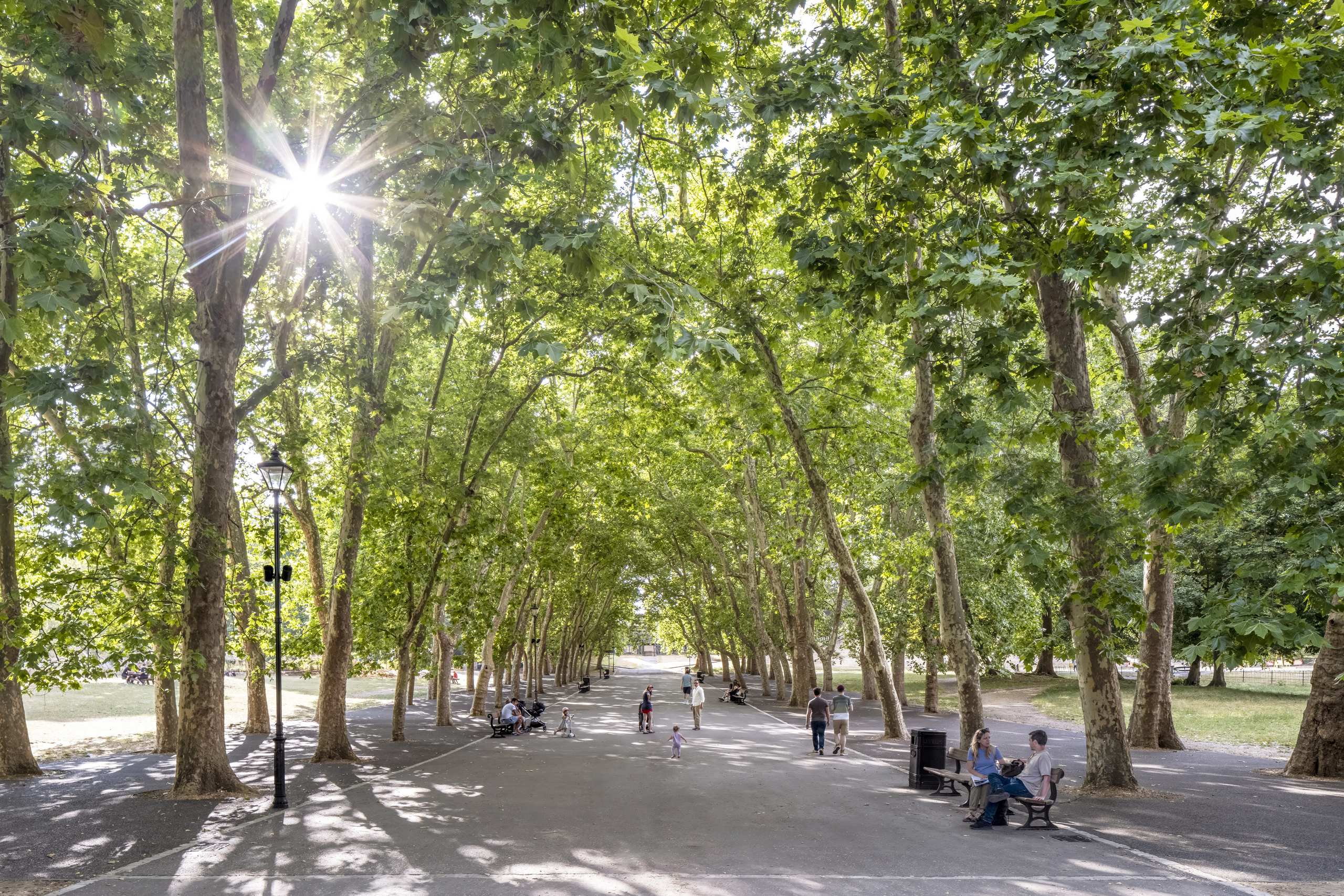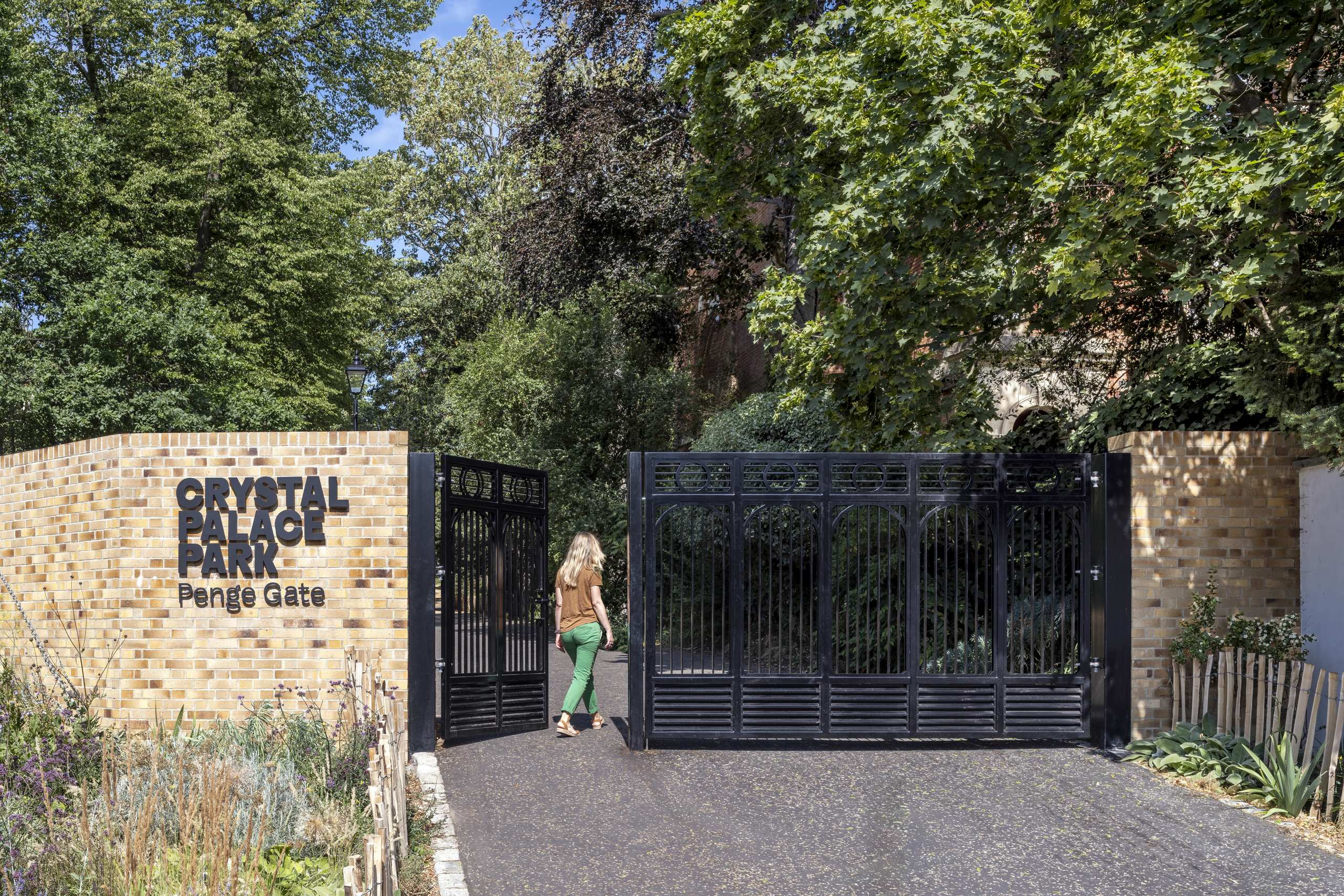
Originally created following the relocation of the Crystal Palace from Hyde Park after the Great Exhibition of 1851, the park was conceived as a pioneering destinationthat combined science, landscape and spectacle. At its heart were the world's first dinosaur sculptures and Geological Court. Over 170 years later, the regeneration re-establishes Crystal Palace Park as an international destinationand a place of discovery for future generations.
Appointed by Bromley Council in 2023 as Lead Consultant and Landscape Architect, HTA Design led a multidisciplinary team of 20 specialist consultants from concept design through to the delivery of one of London's most ambitious heritage-led landscape regeneration projects.
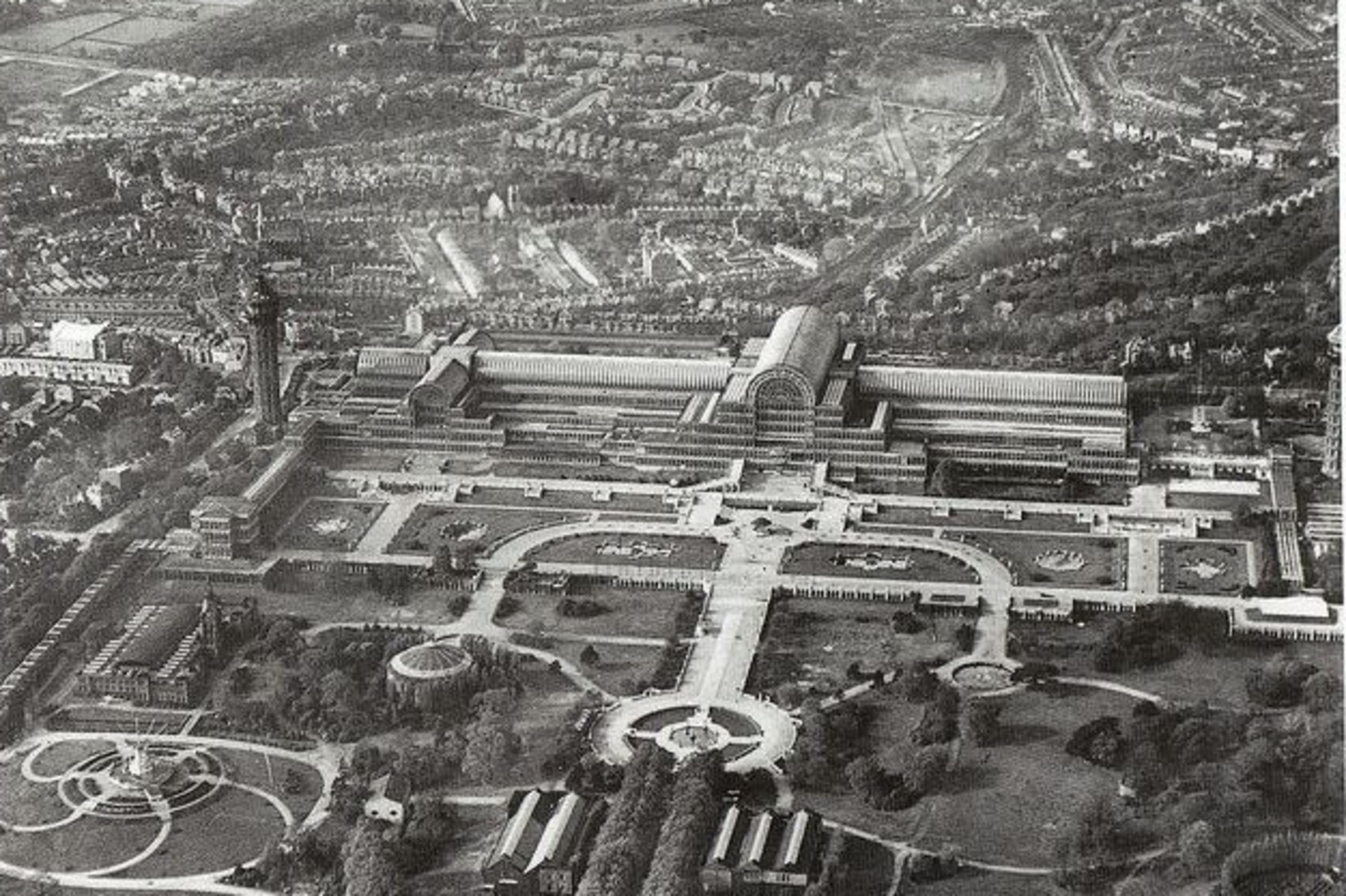
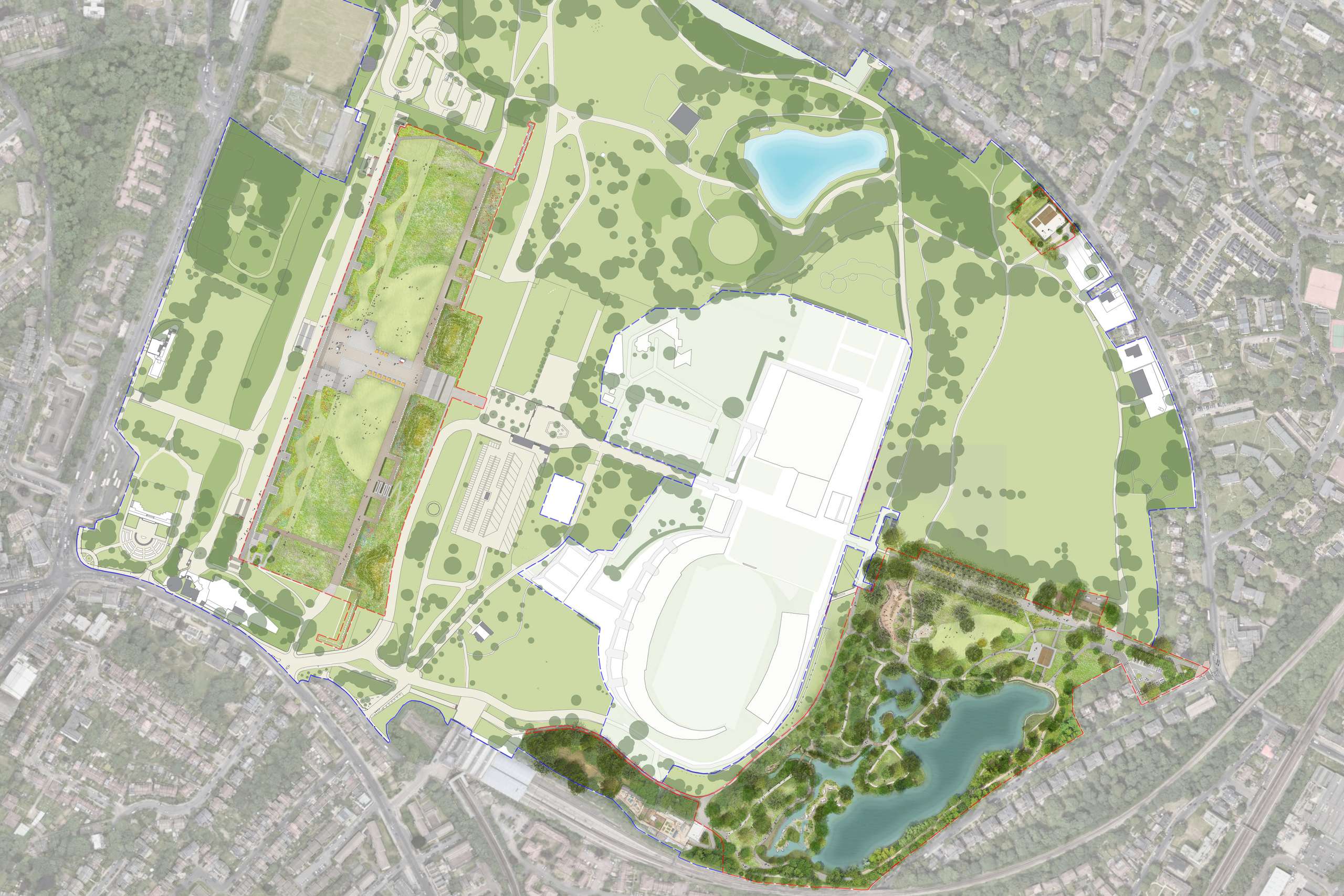
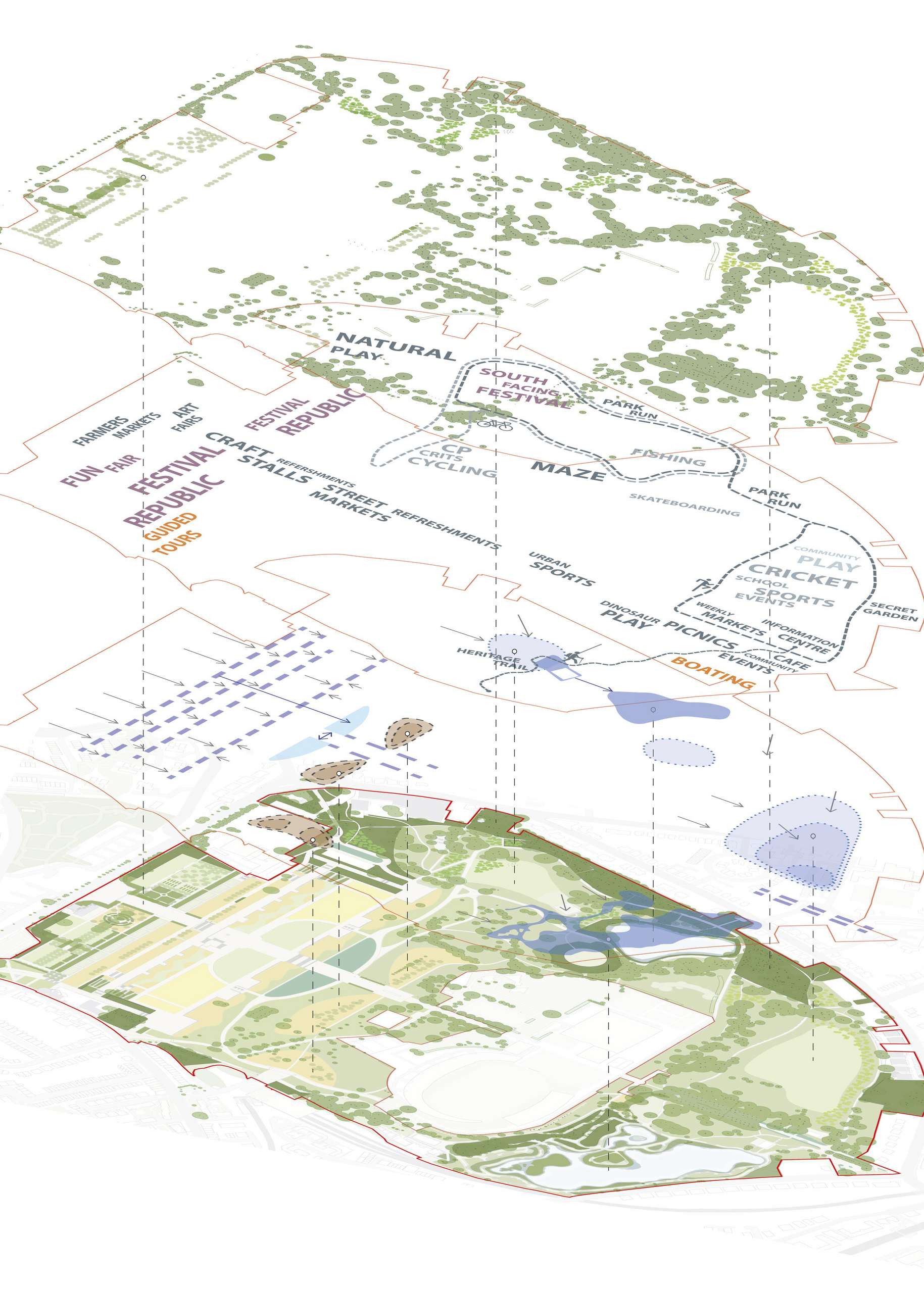
Our design philosophy builds on Paxton’s legacy of education, entertainment, andinnovation. It reinterprets his linear journey through time by connecting the past, present, and future through a layered approach. The first layer, ‘restoring’, prioritises the conservation and reinstatement of the park’s remarkable heritage assets. The second layer, ‘revitalising’ transforms the park into an inclusive, biodiverse, and adaptable environment that supports a wide range ofevents and activities. The final layer, ‘reimagining’, reframes what the park’s legacy can offer future generations, extending Paxton’s ideals of education and entertainment.
Geological Court
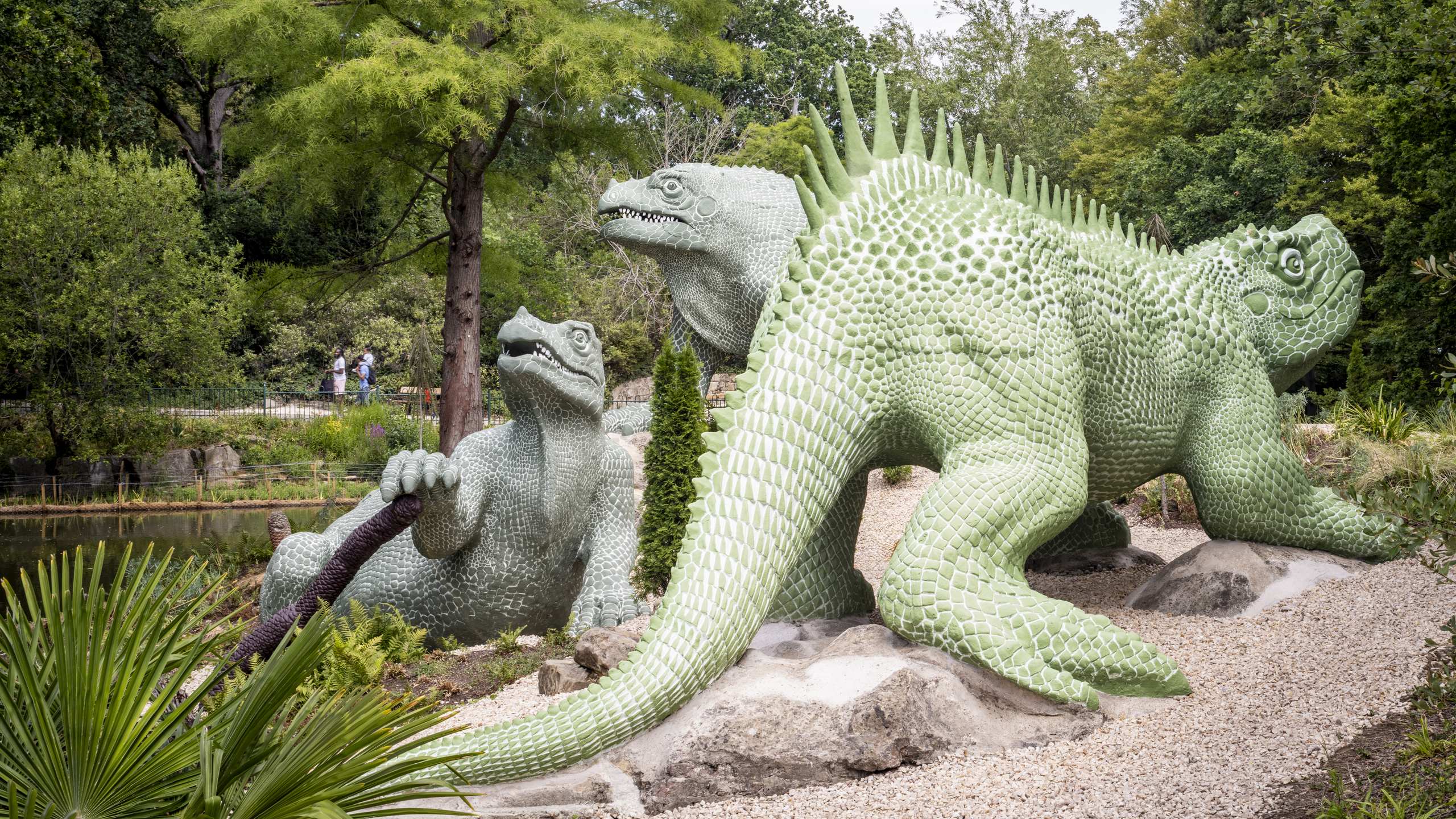
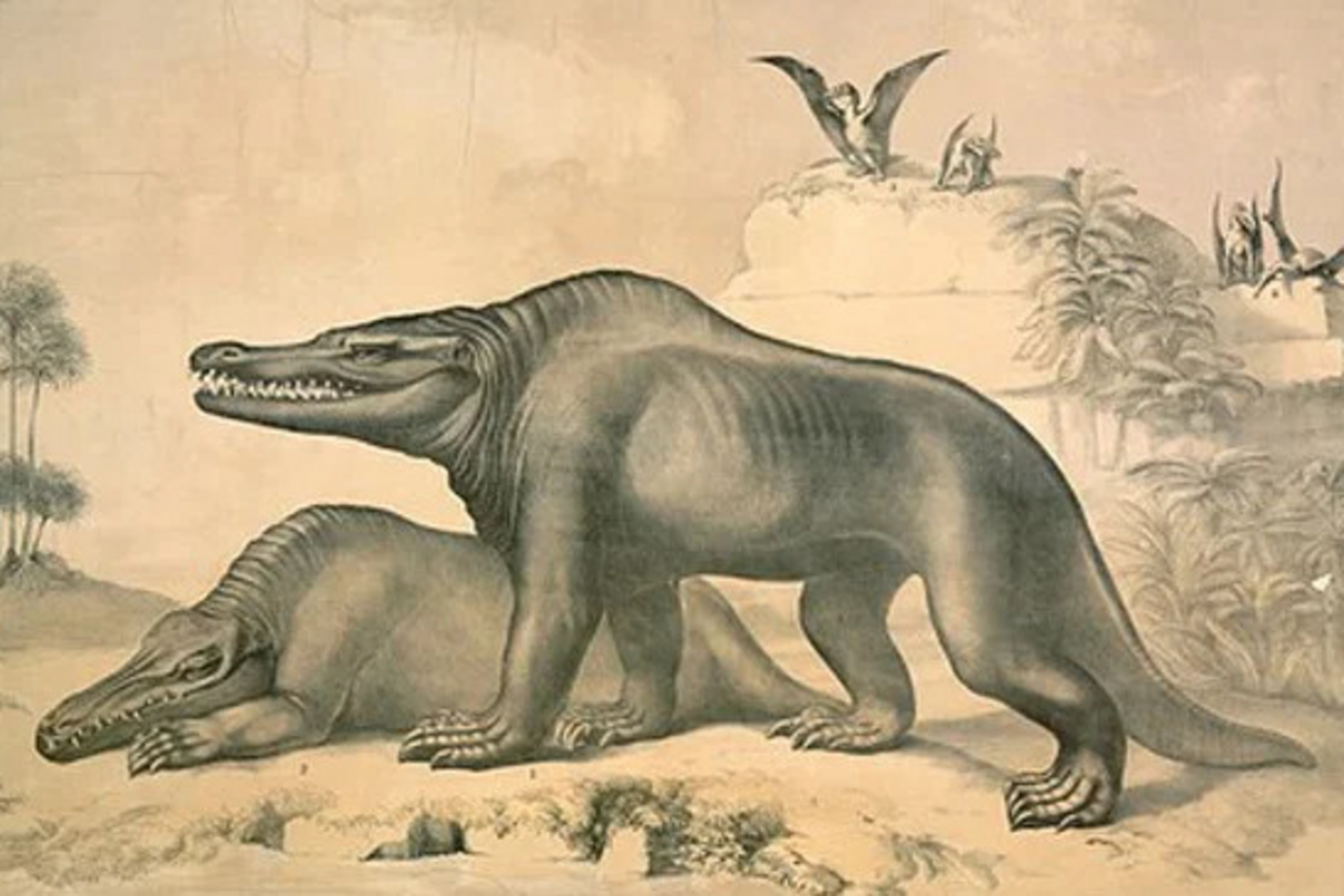
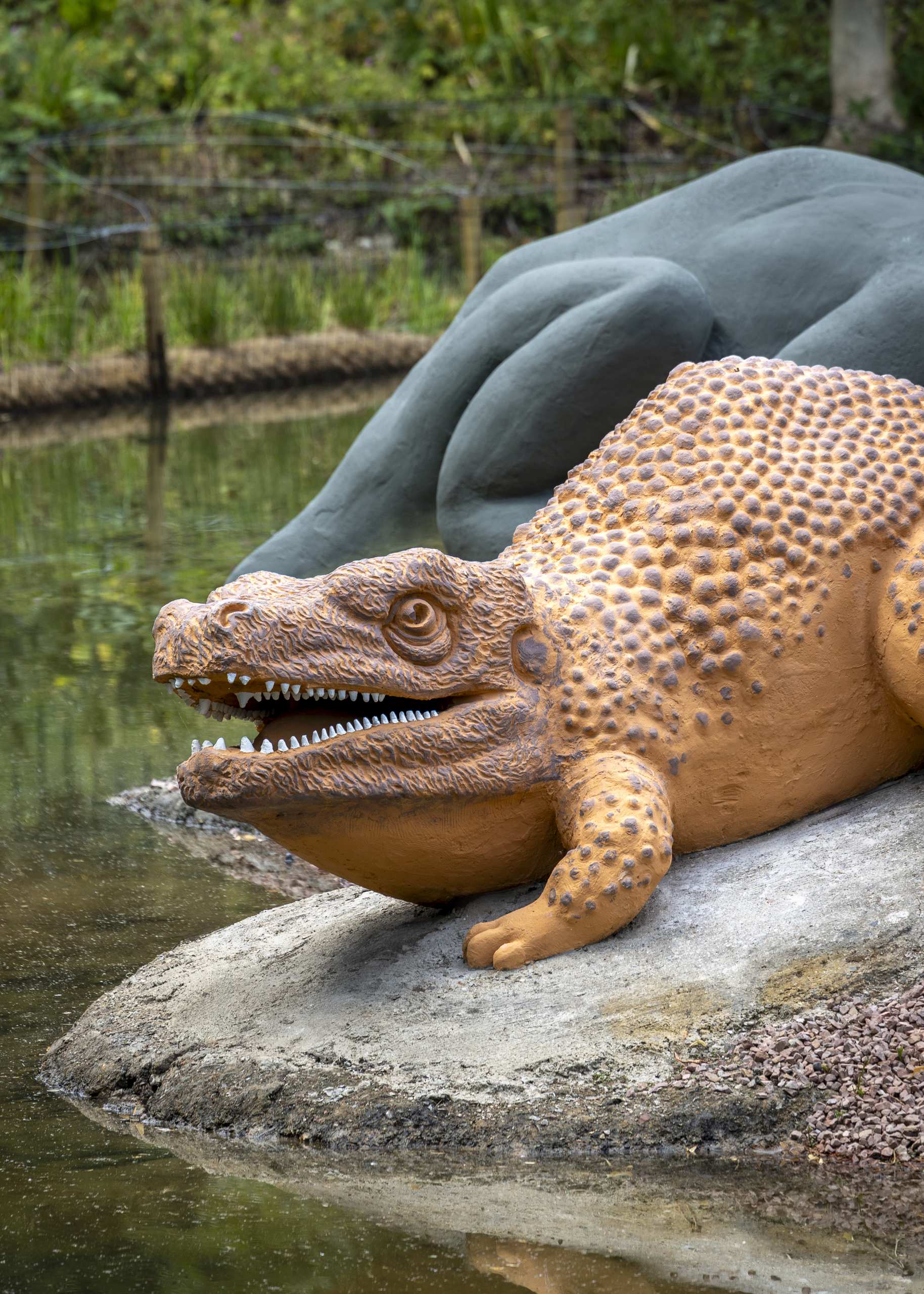
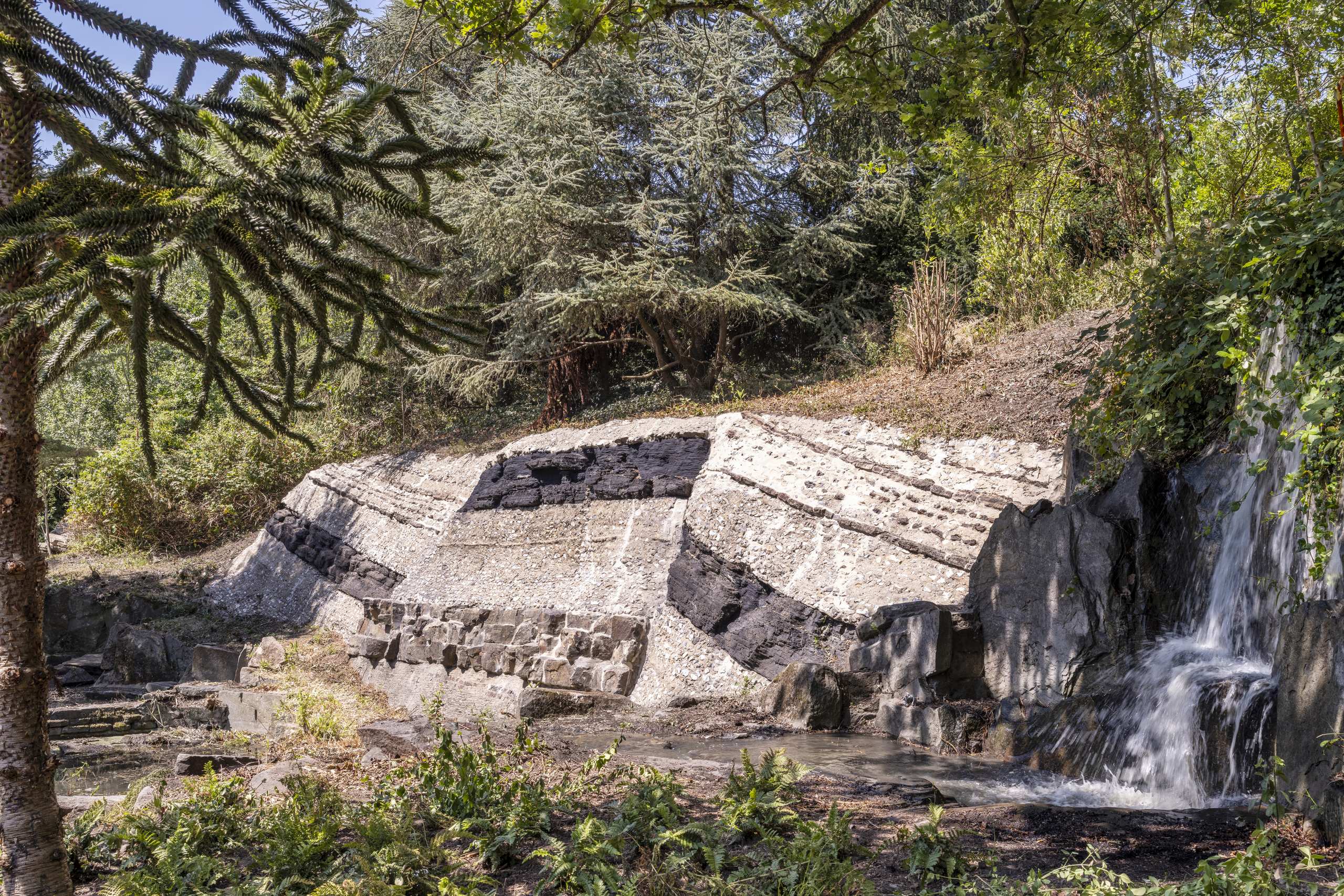
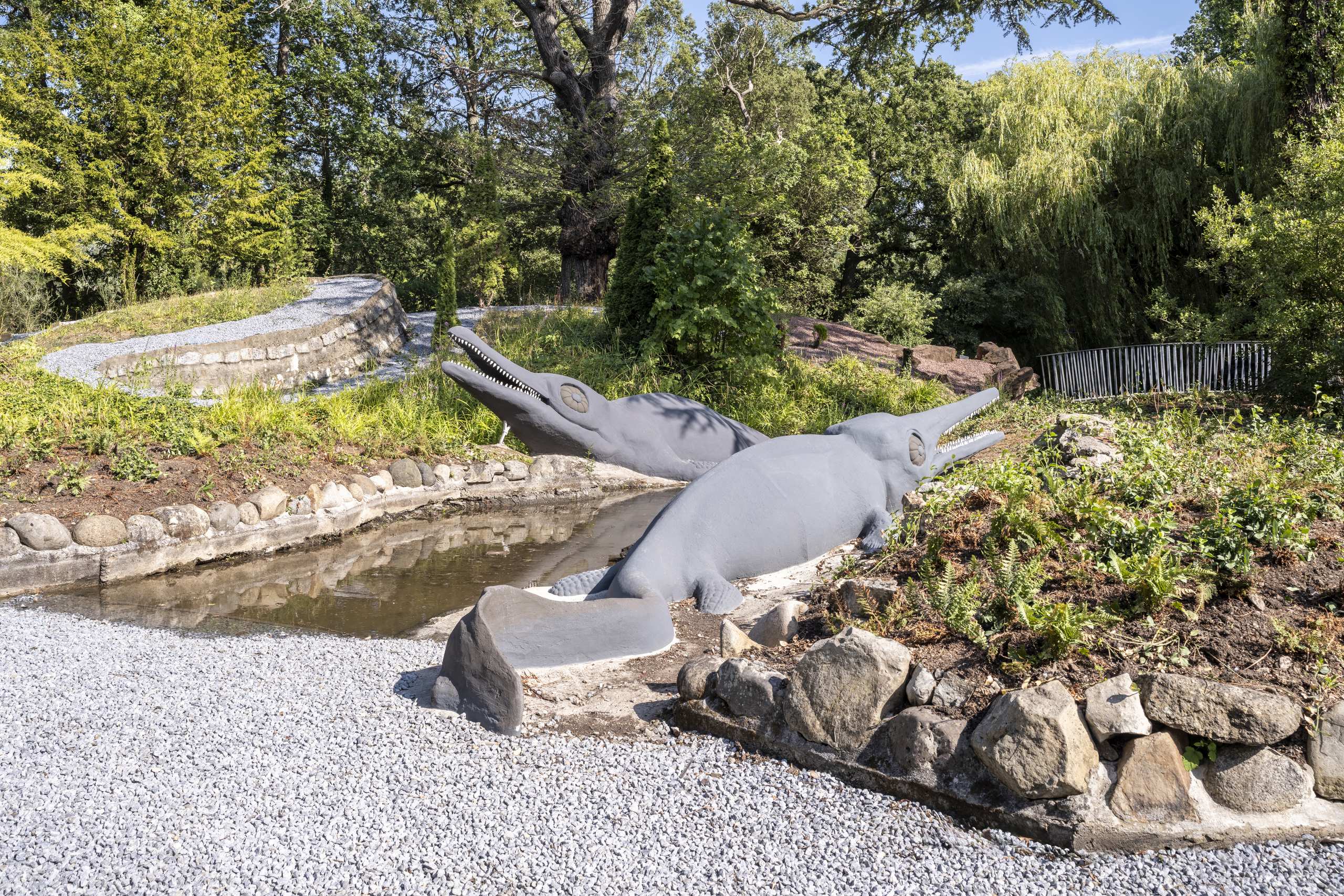
The Grade I listed Geological Court was designed by Paxton, Ansted, and Hawkins. It features a landscape of water, prehistoric creatures, and rock formations. These were arranged to show how Victorians understood "Deep Time." Over the years, the sculptures and geological displays were damaged by the weather, decay, and vandalism. In 2020, they were added to Historic England’s "At-Risk" register for a second time.
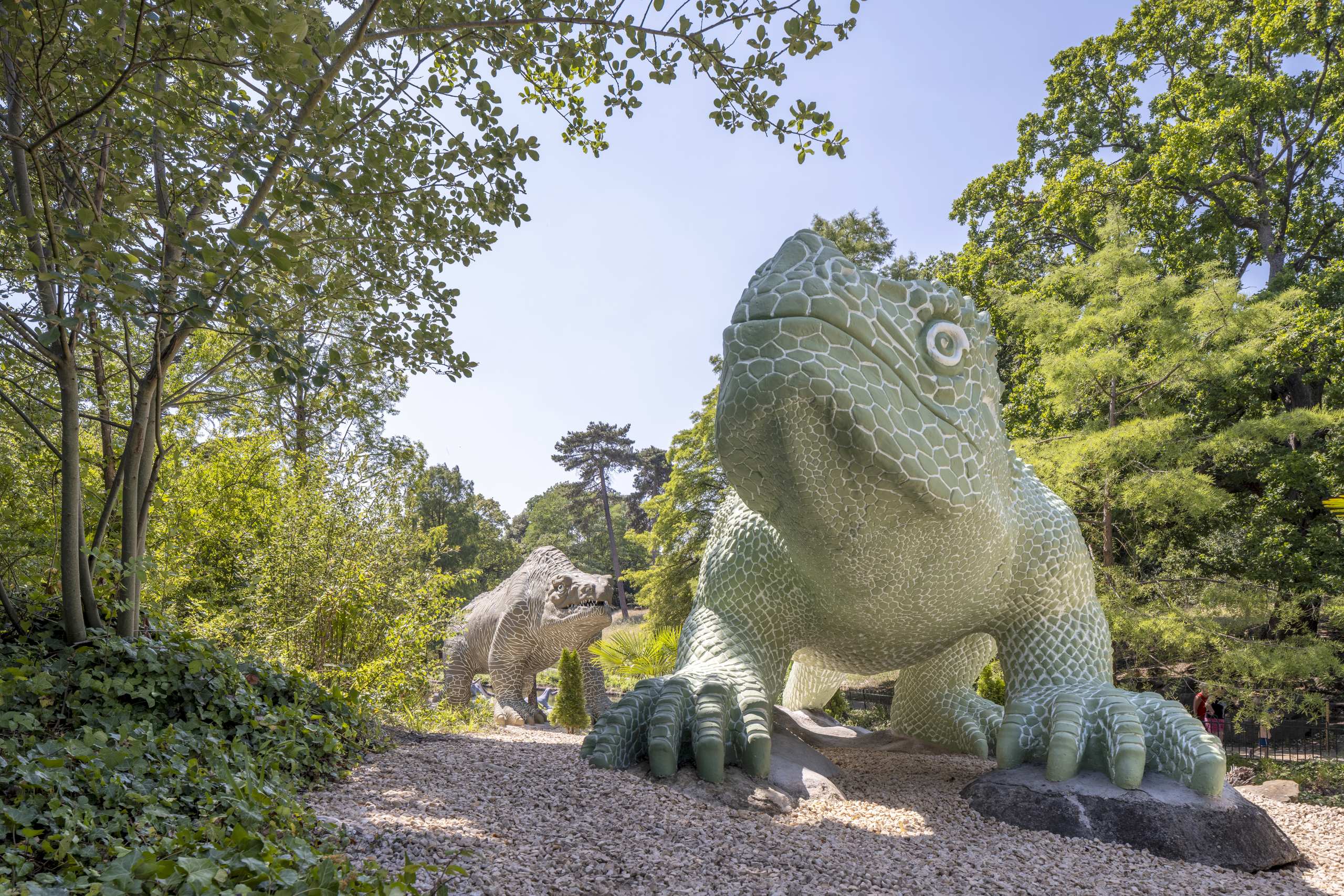
Our team worked closely with Historic England, SSHC Conservators, and the Friends of the Crystal Palace Park Dinosaurs to create a long-term conservation plan. This plan was based on scientific research, material testing, and detailed surveys. We aimed to save as much of the original historic material as possible. We used various techniques, including specialised cleaning, structural repairs, and 3D printing, to restore 14 geological displays and 30 dinosaur sculptures. We also used 300kg of Natural Hydraulic Lime during the repairs.
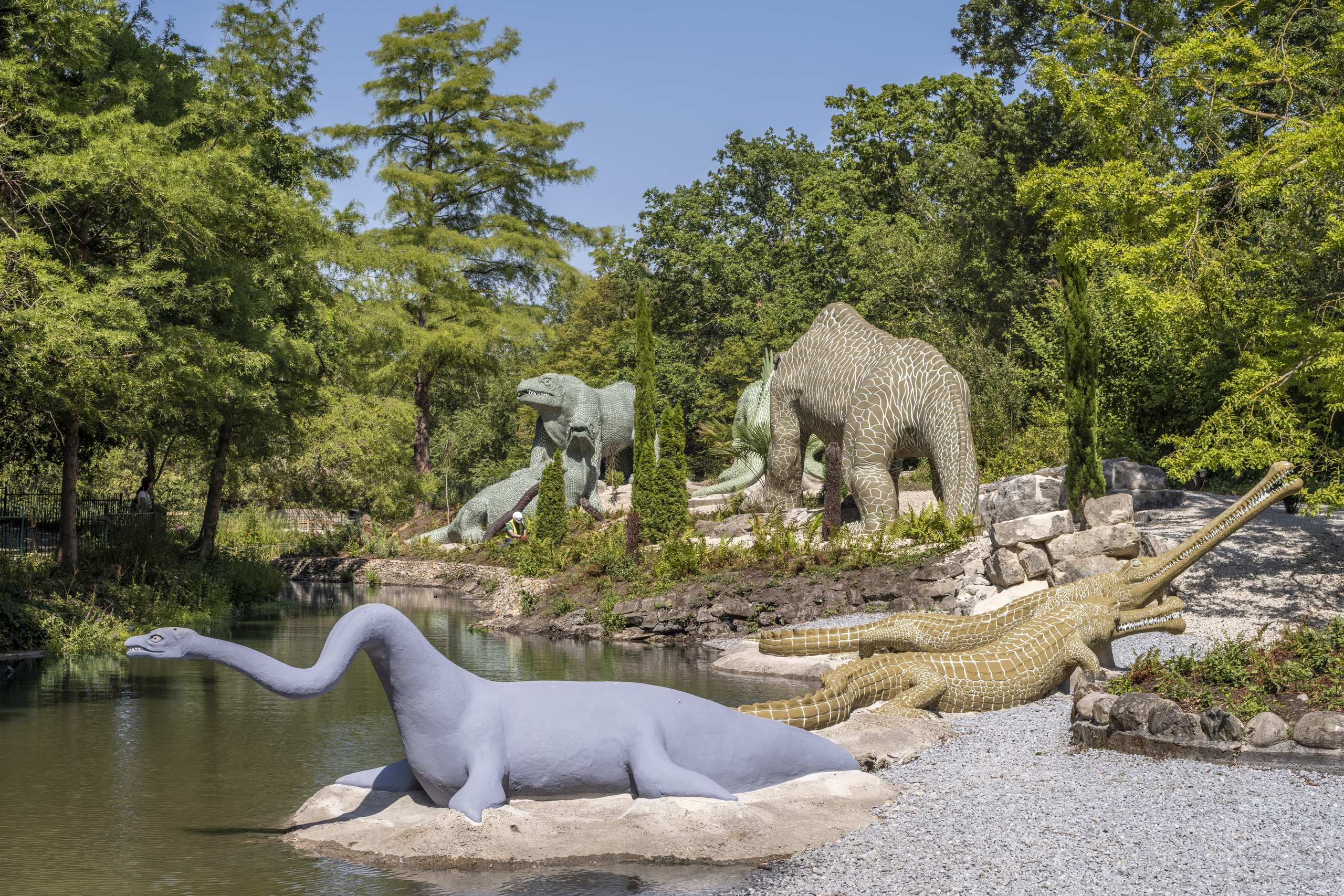
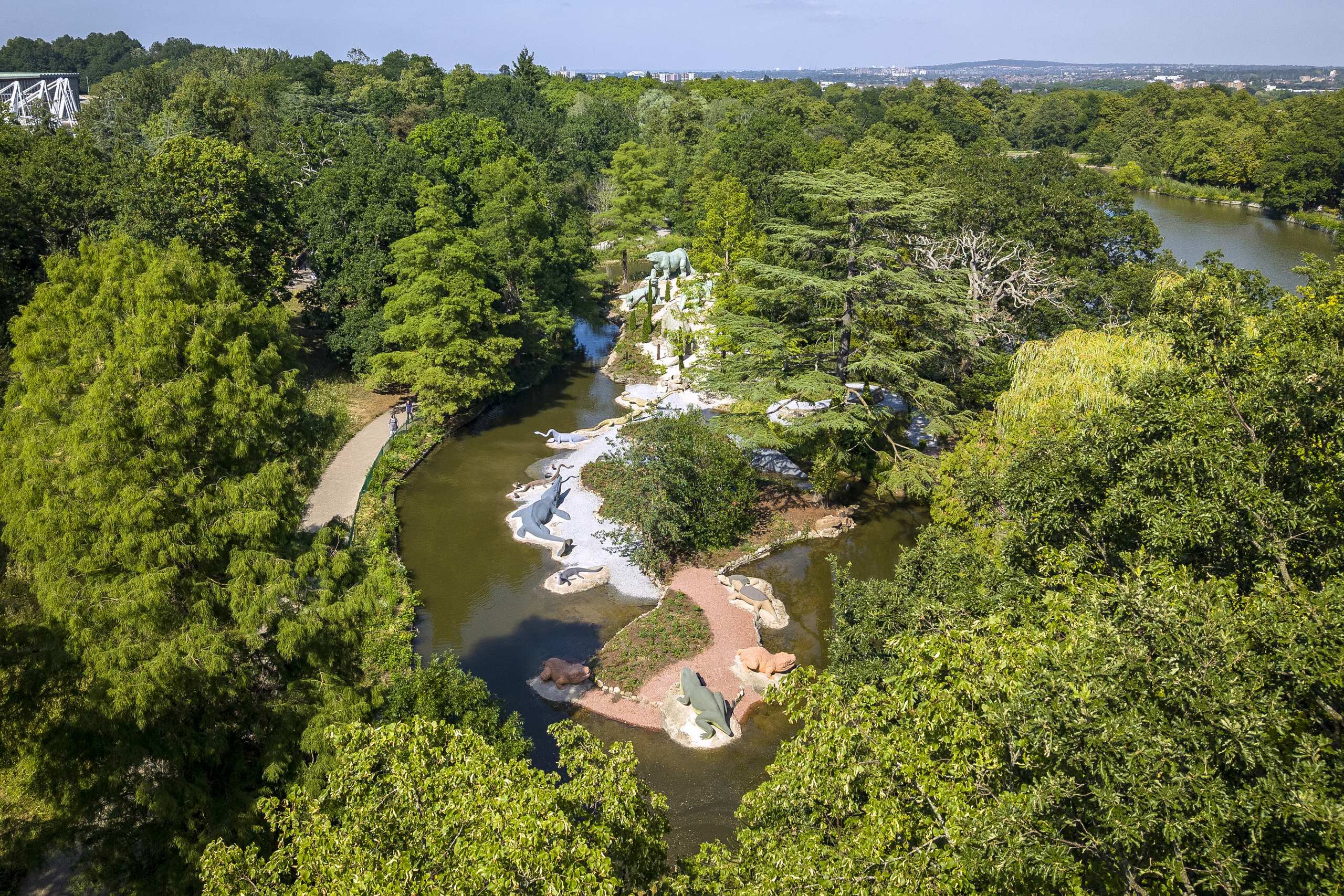
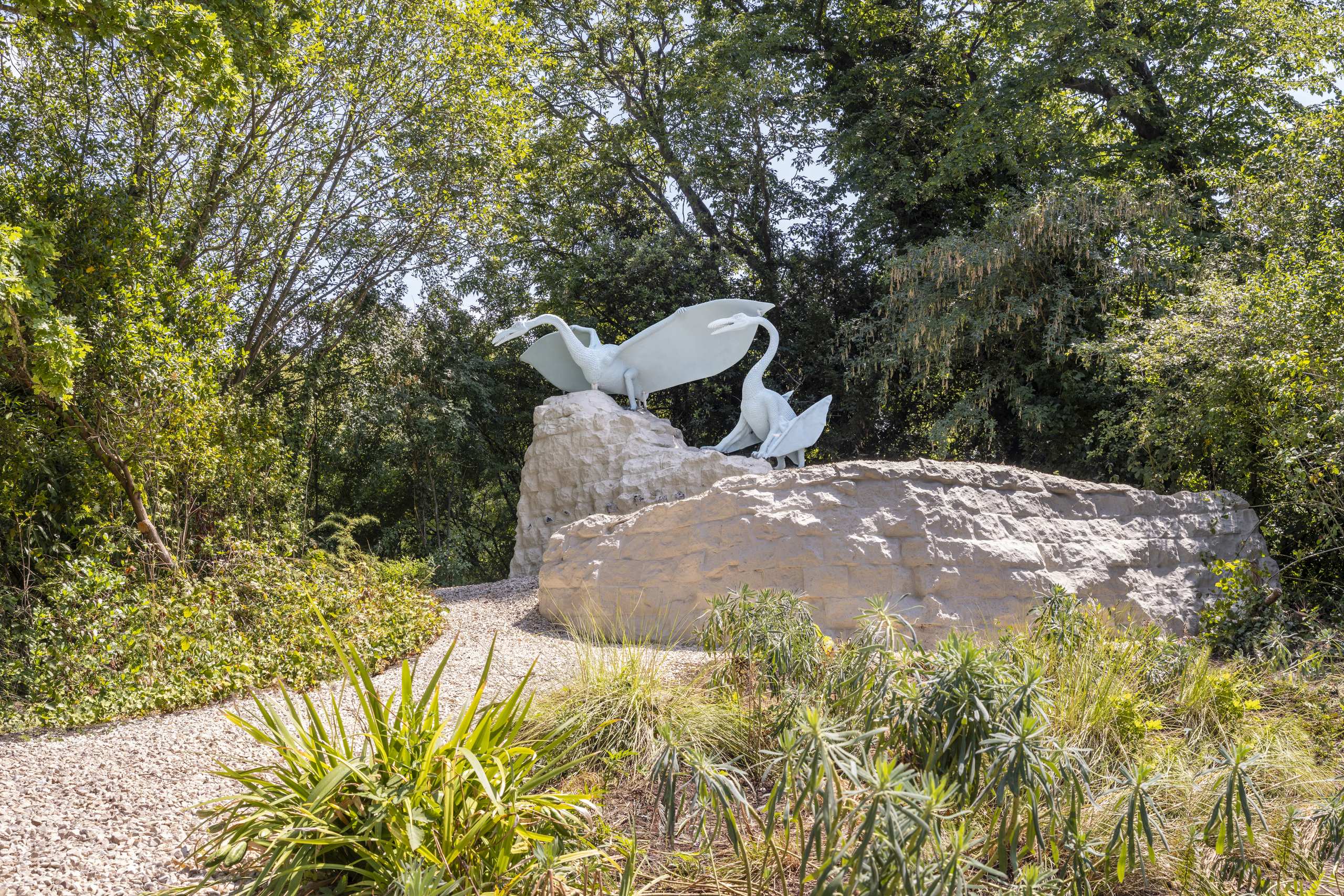
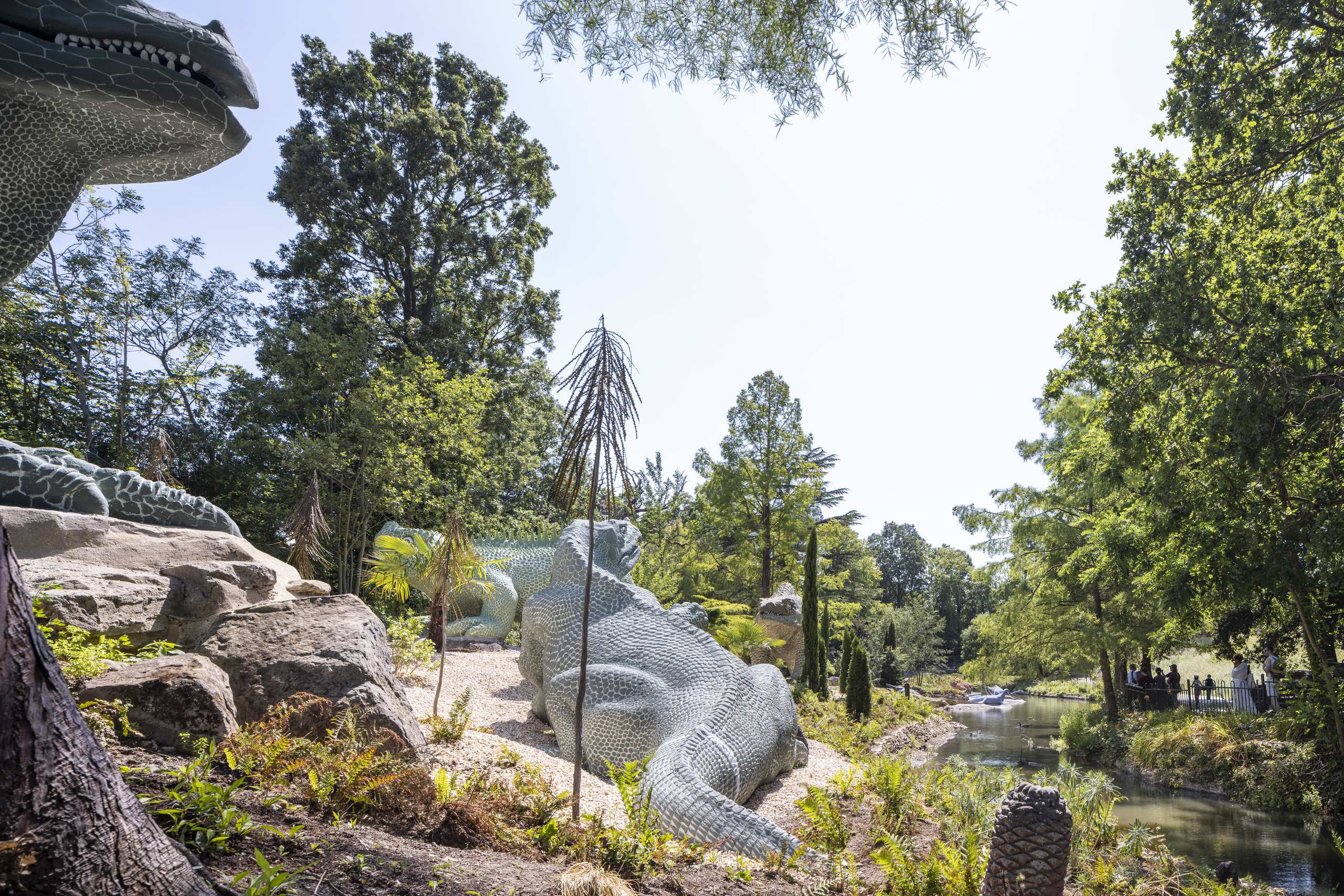
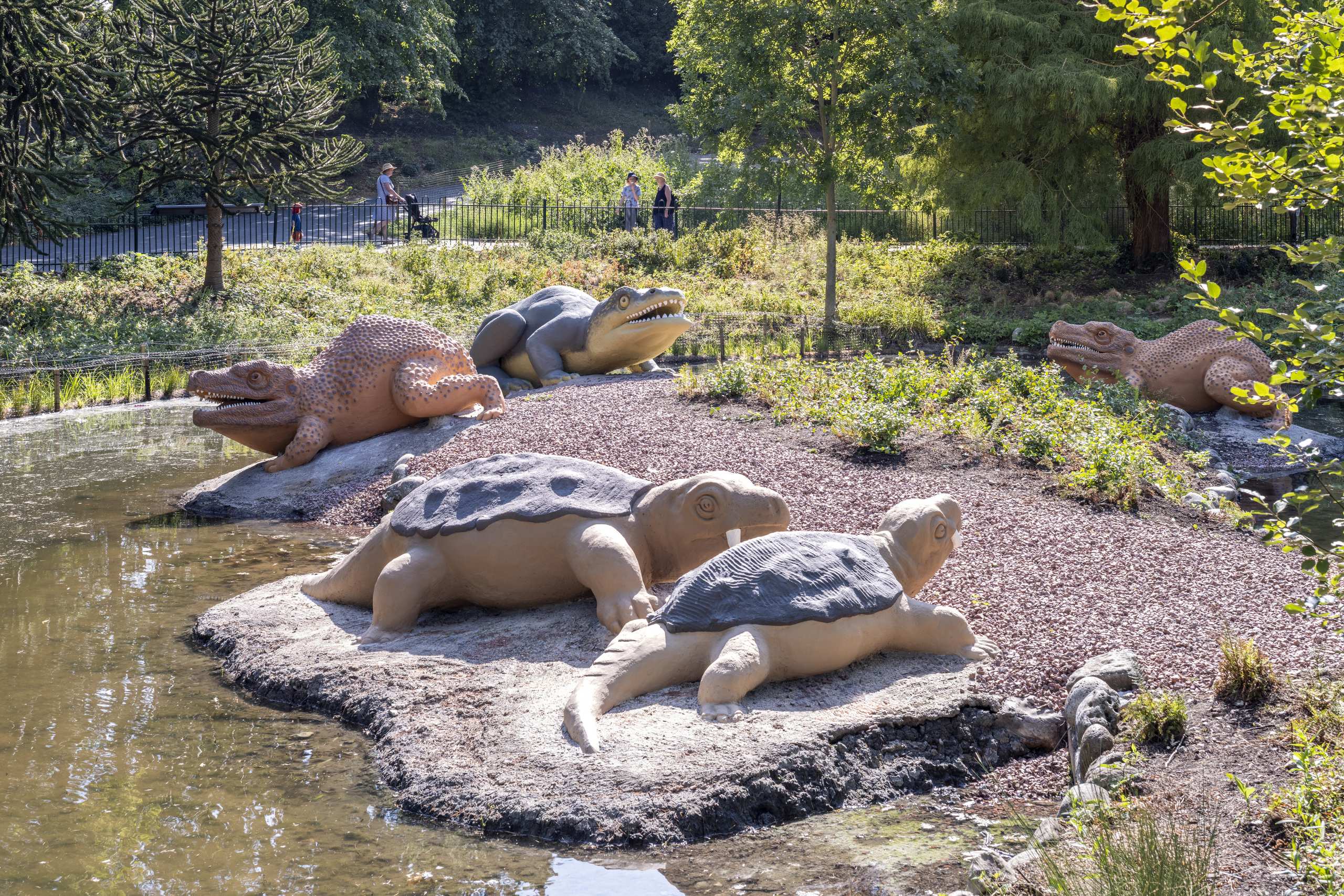
Paint analysis identified original 1850s colours with gaps were informed by Hawkins’ palaeo art and in situ samples informing the final colour selection. Using over 300 litres of paint, and 50 different colours, we created a striking display allowing visitors to recognise and navigate between species from afar enhancing the educational value and theatrical experience of the setting.
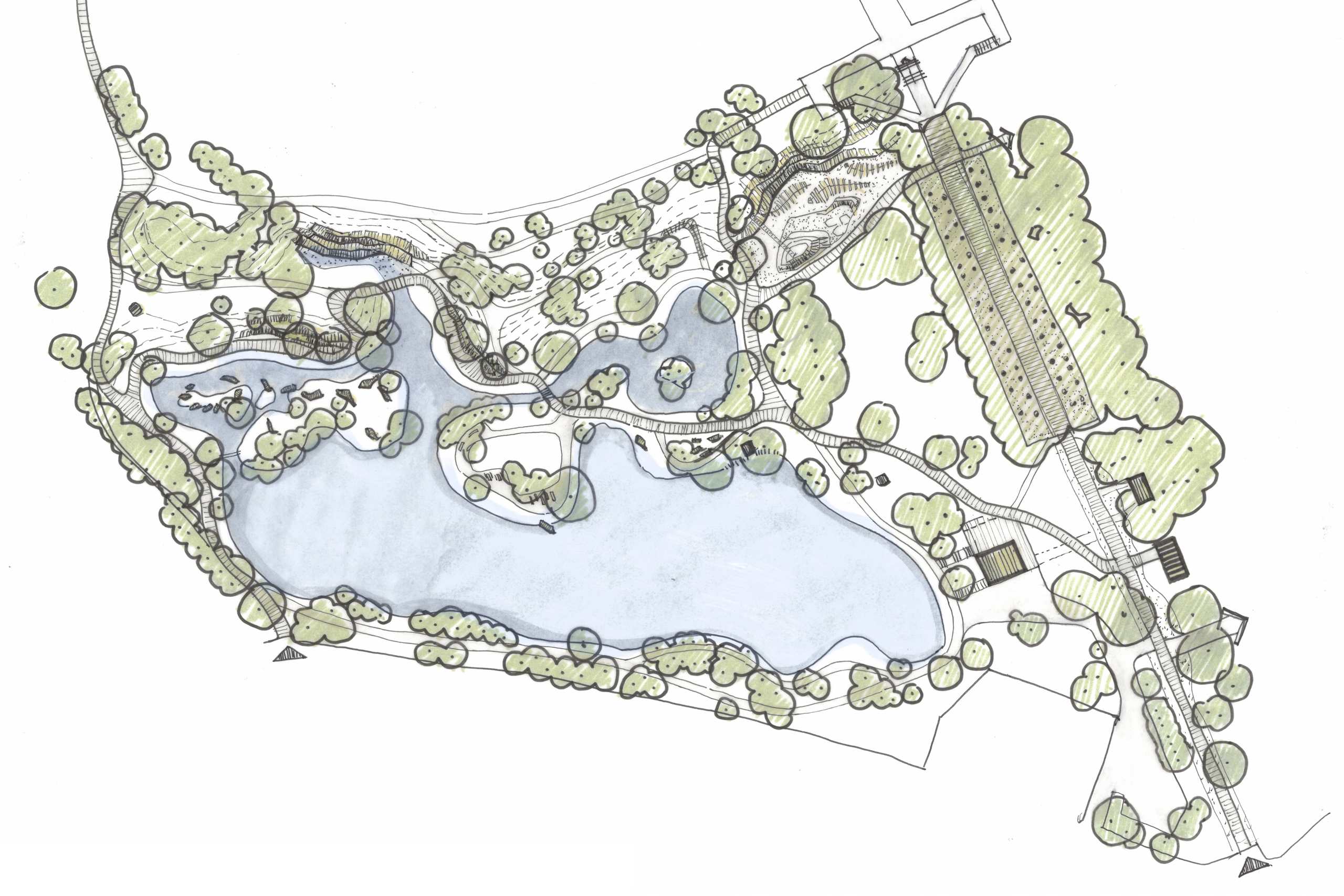
Removal of unmanaged vegetation identified as a “decay mechanism” to the Sculptures reveals the historic topography and reinstates key views and vistas across the Geological Court. De-silting of the Upper Lake has improved water depth and ecology, uncovering fascinating finds; from lost ammonites to the fact that the Ichthyosaurus tail is connected toits body.
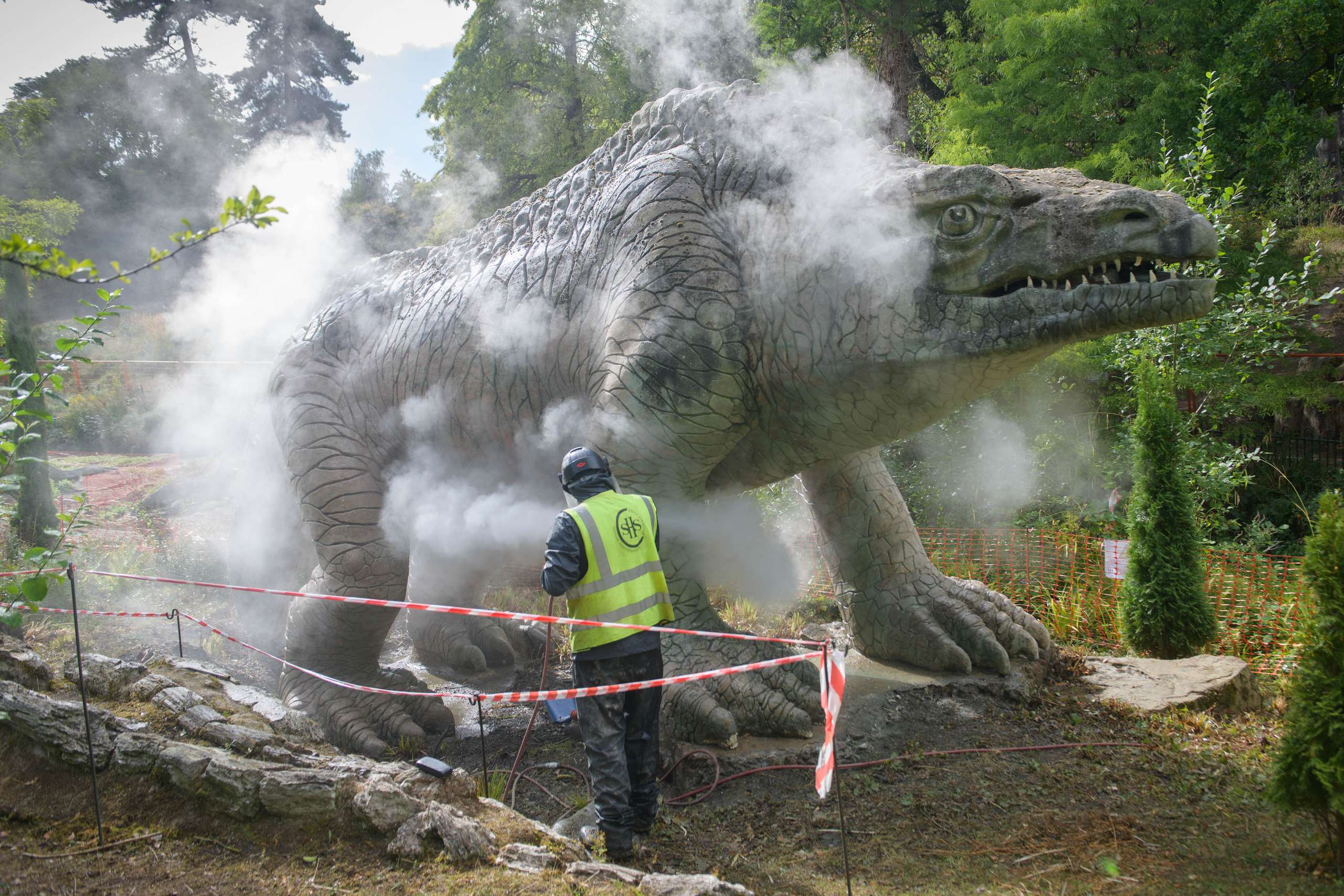
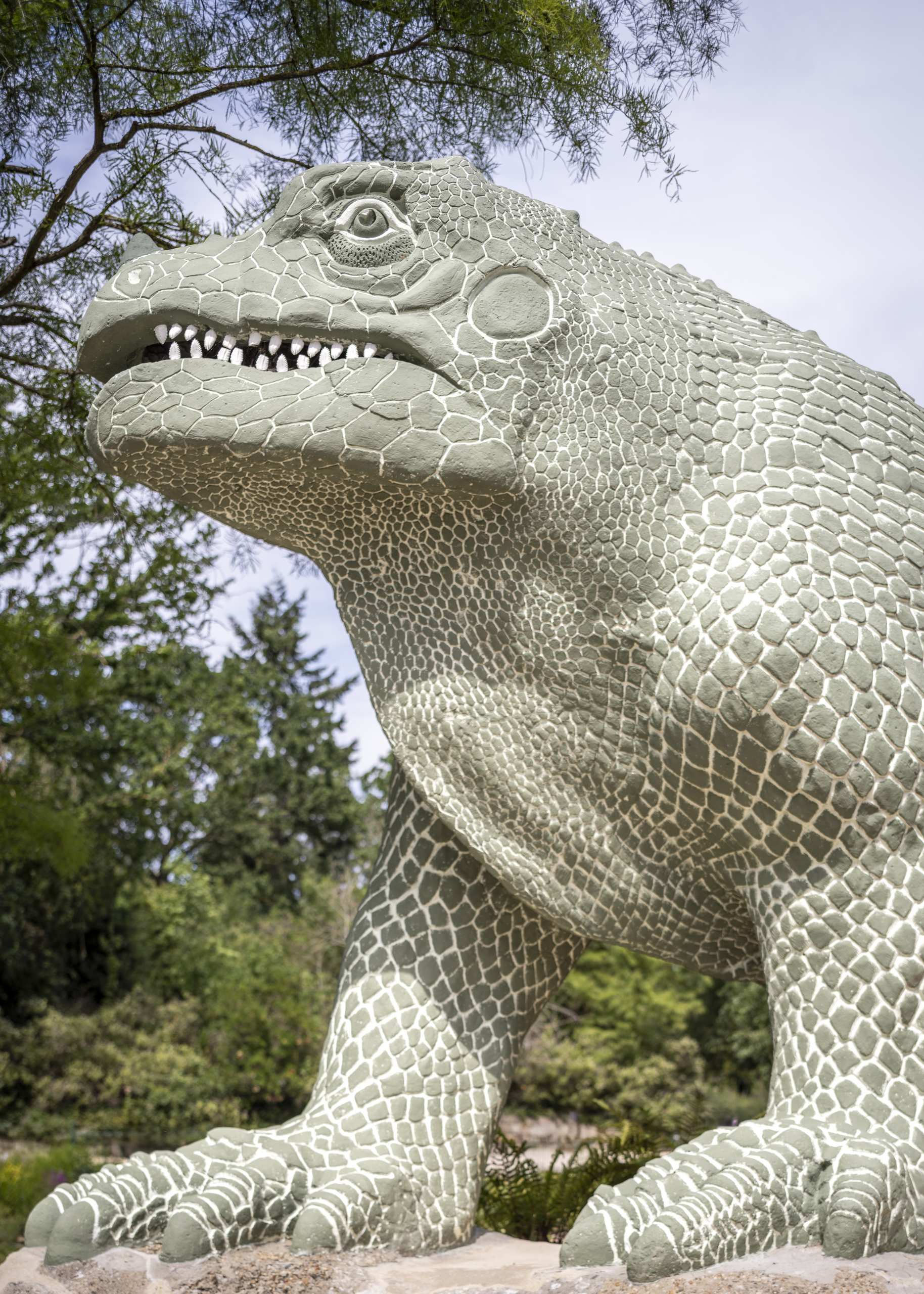
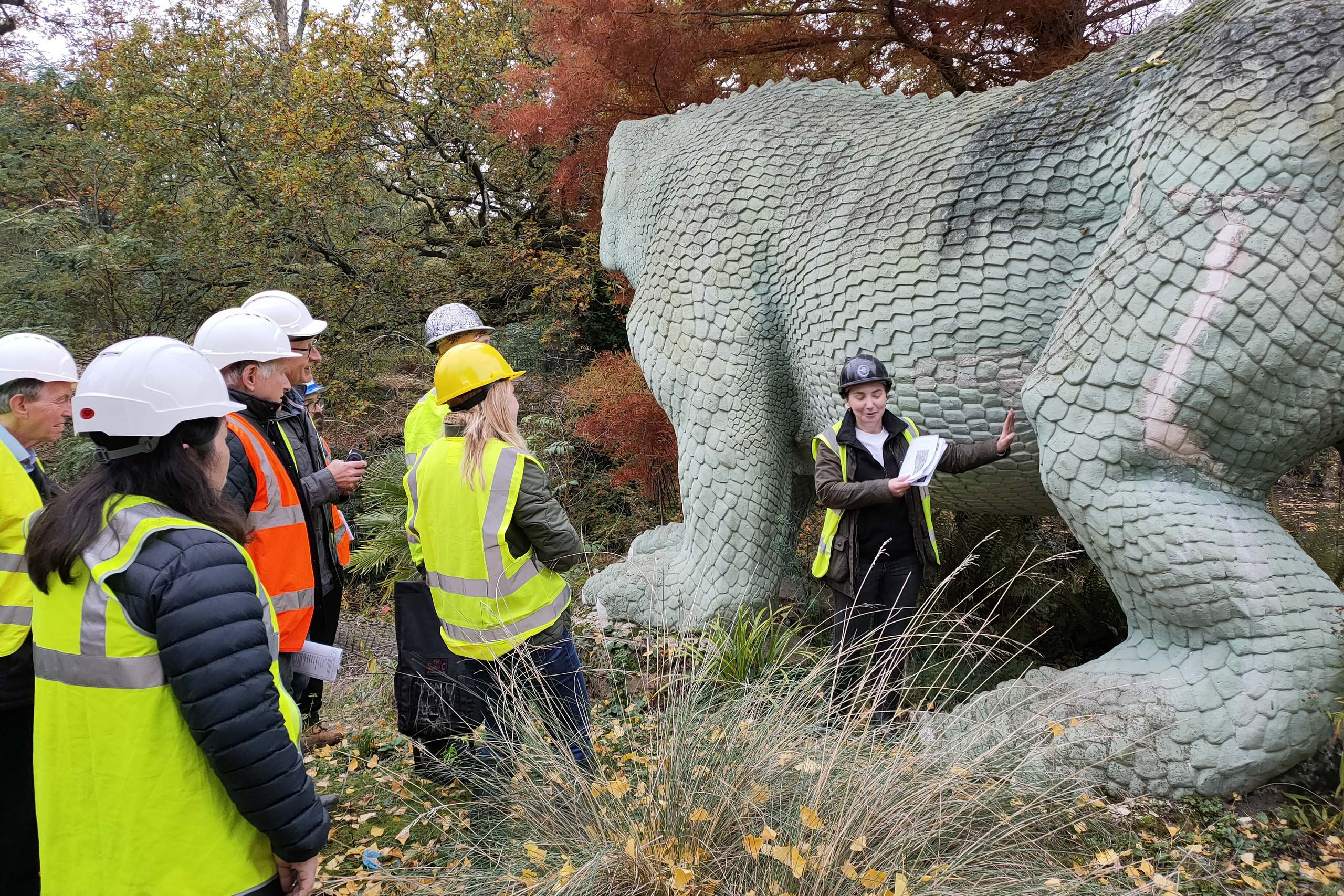
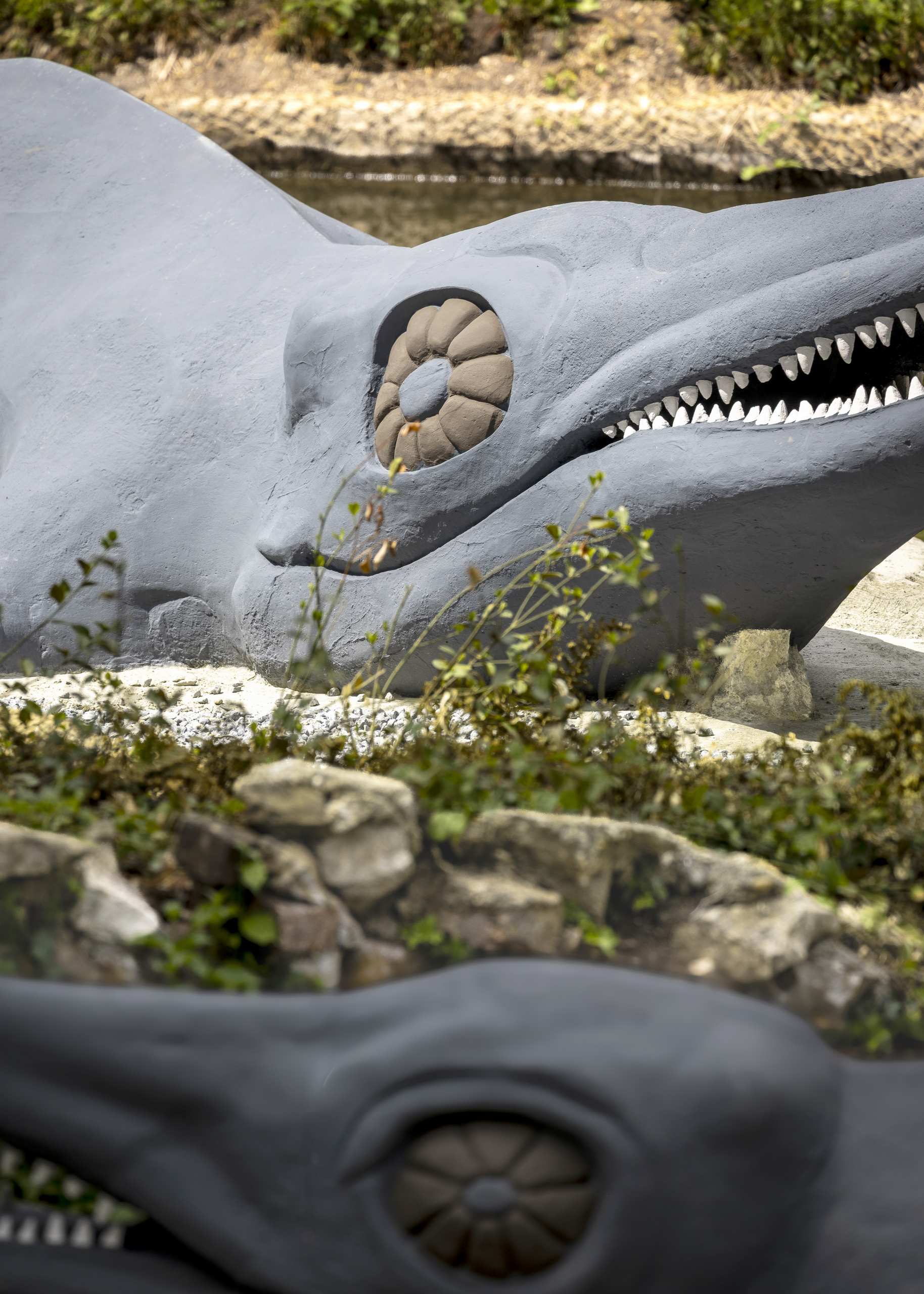
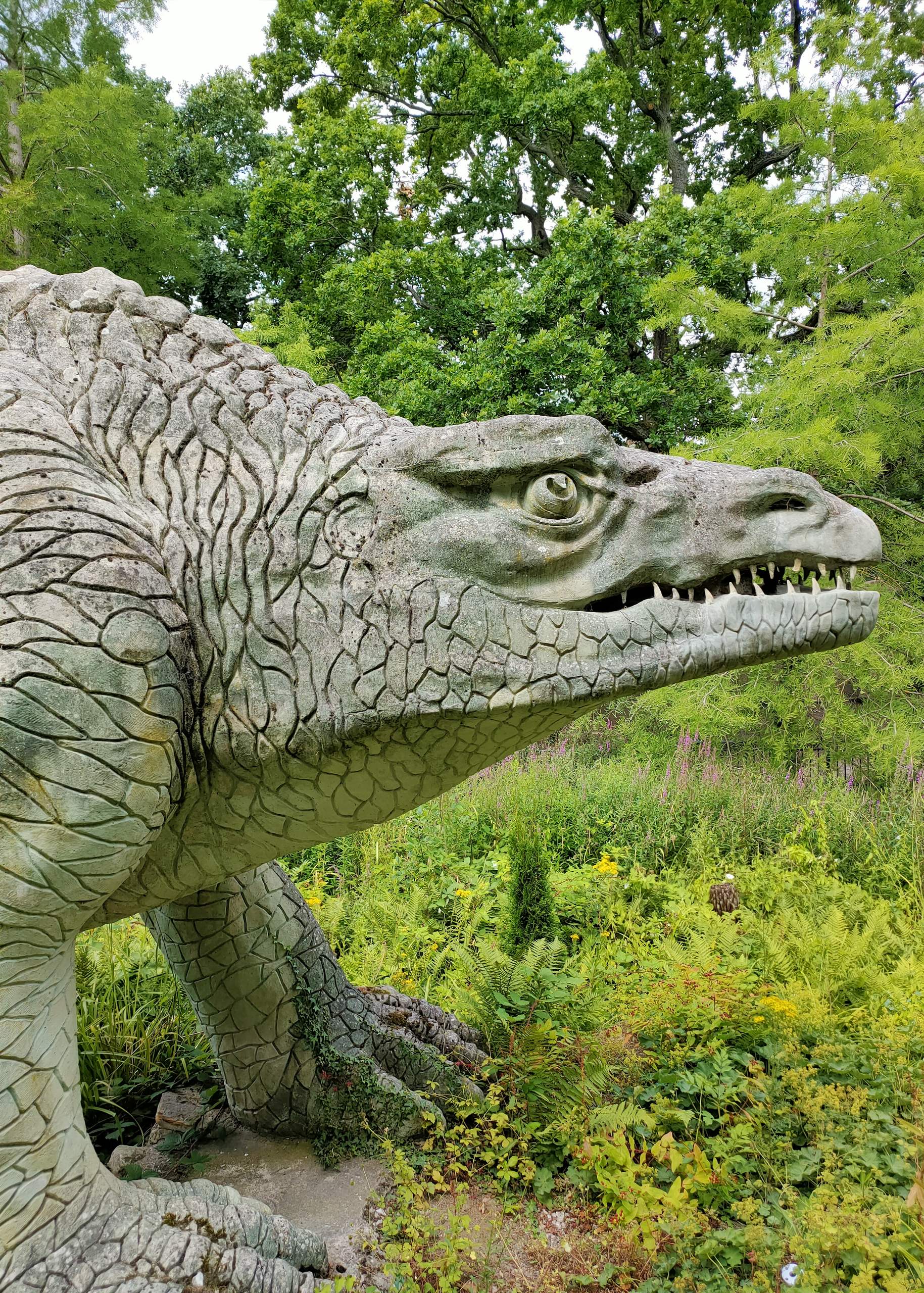
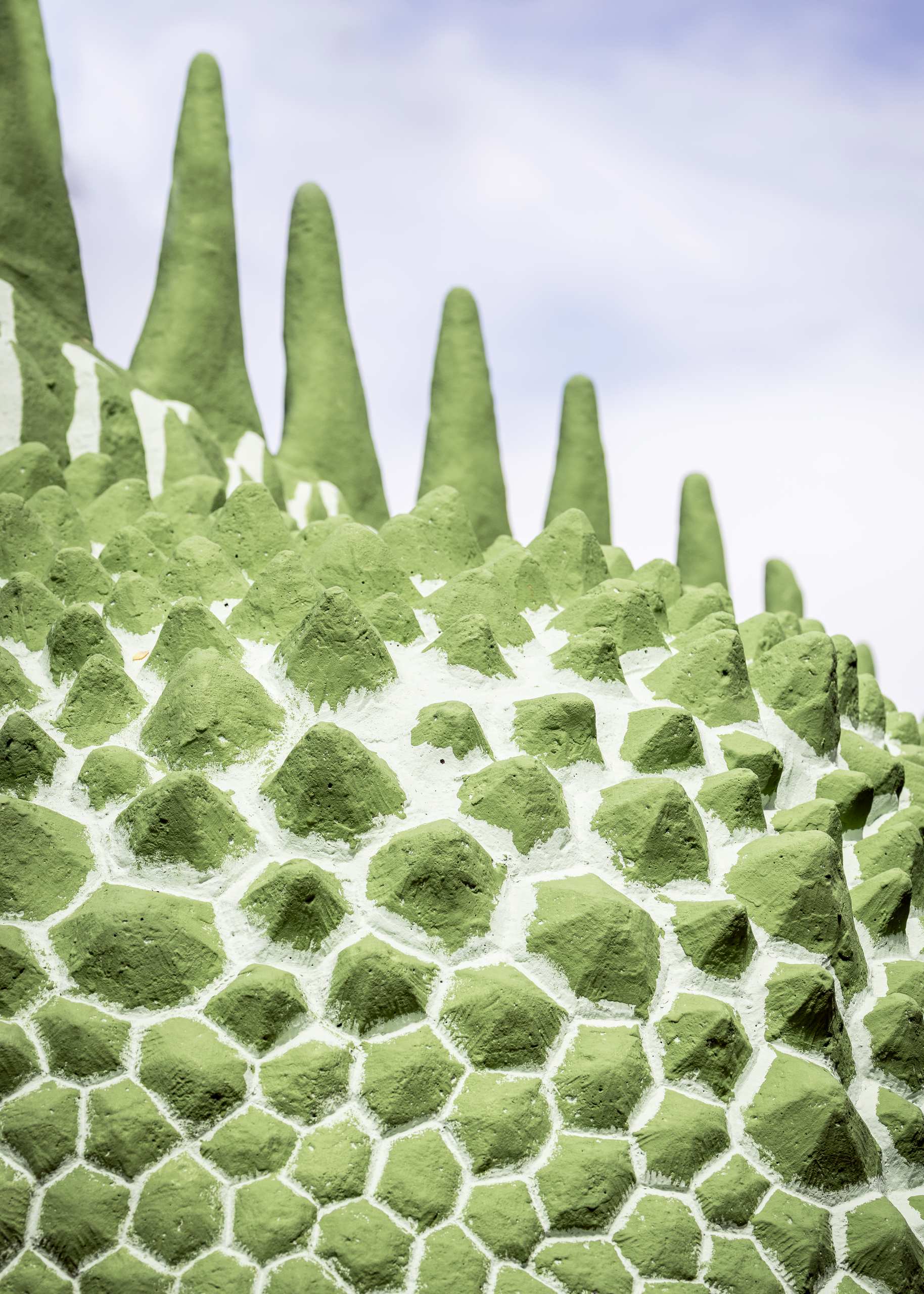
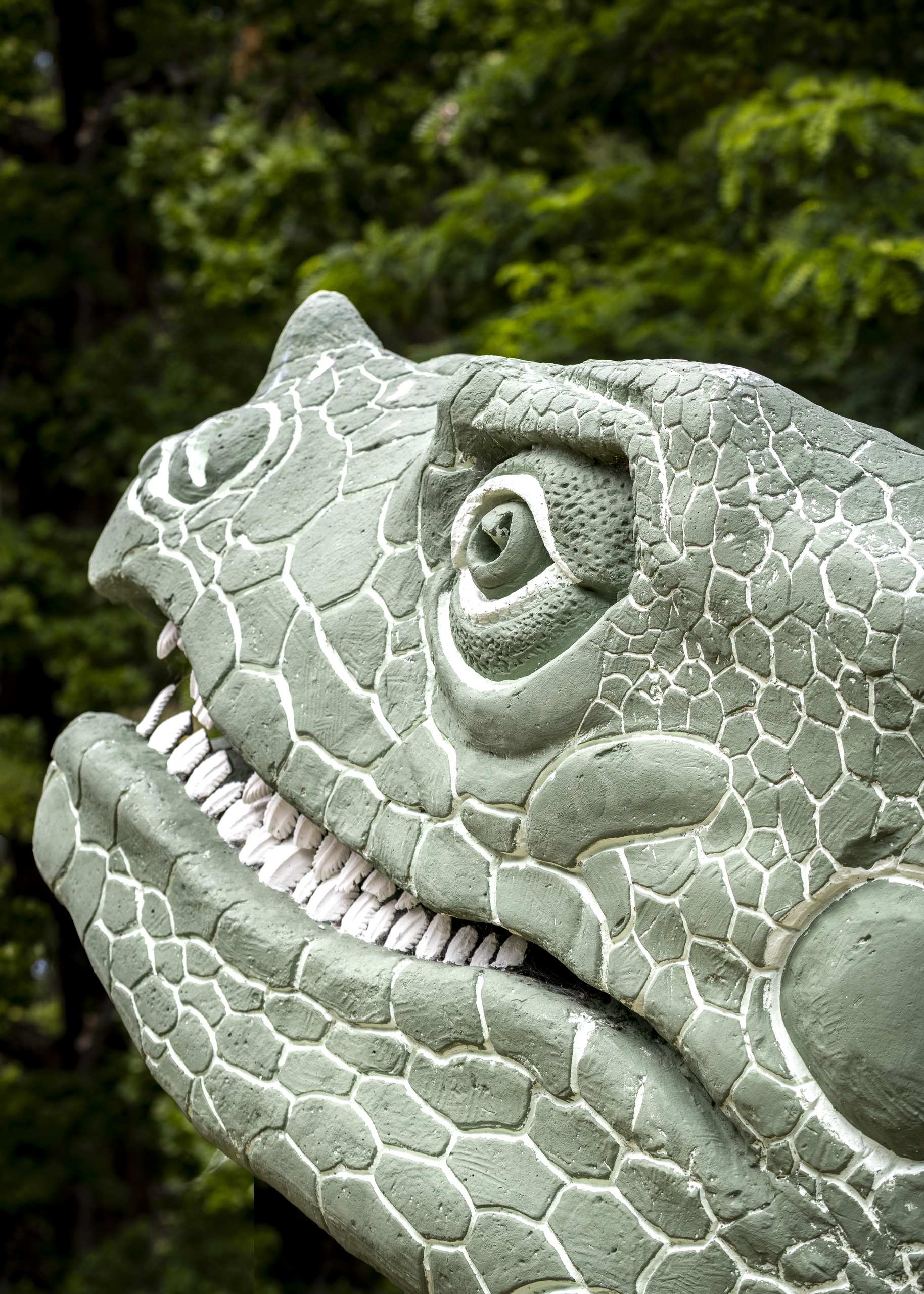
New gravel formations are introduced around the sculptures and Geological Illustrations to reinforce the geological narrative while supporting vegetation management. These swathes are designed to reflect the successive ages of the geology, transitioning from the Triassic period's redsandstone margin deposits to a Jurassic shoreline (setting for water-baseddinosaurs), and finally into the Purbeck and Wealden formations—the specificgeological contexts associated with the Iguanodon and Hylaeosaurus.
Beyond these gravel margins, a low-growing planting zone follows palaeo-planting principles to illustrate plant evolution through deep time. This zone showcases a progression of species: starting with early, simple plants, moving through the ferns and conifers of the Triassic and Jurassic periods, and concluding with the emergence of flowering species in the Cretaceous.
.jpg)
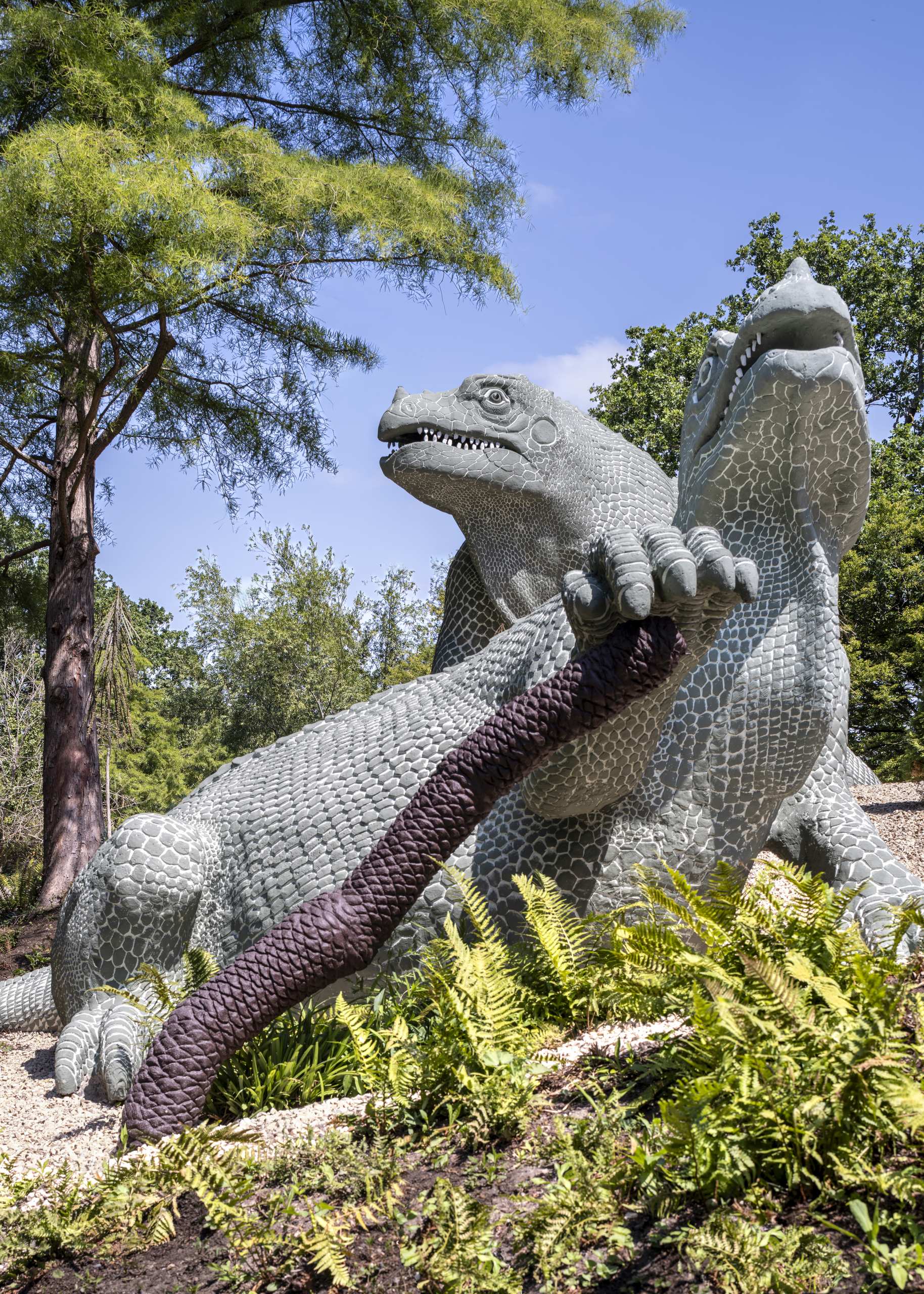
To complete the restoration, a new water recirculation system has been installed. This improves lake hydrology while reinstating the delicate waterfalls - an iconic feature that frames the Coal Measures and serves as a direct reference to Paxton’s historic fountains. By cascading over the secondary island weirs, this water creates a calming, multisensory experience that animates the entire Geological Court.
Italian Terraces
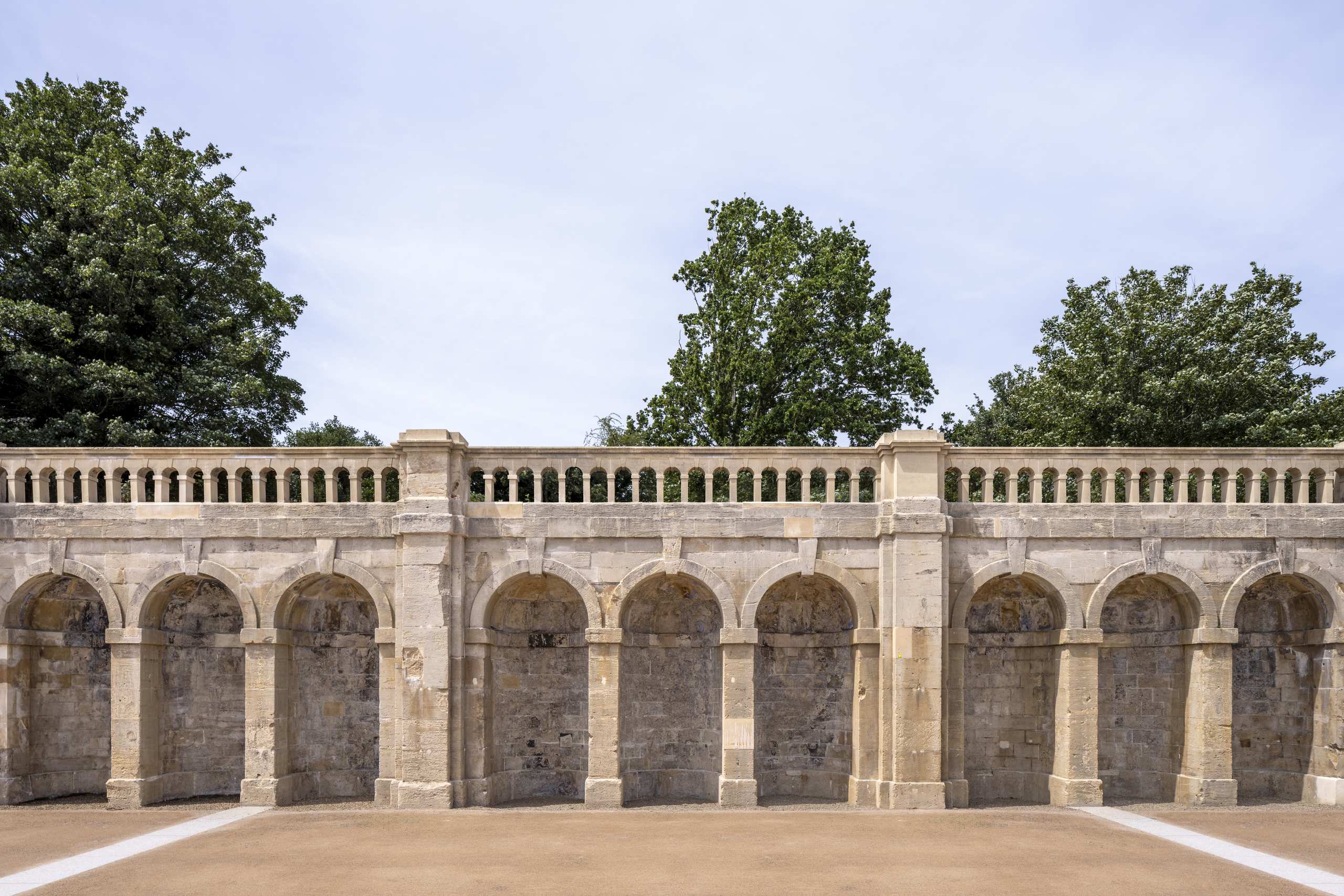
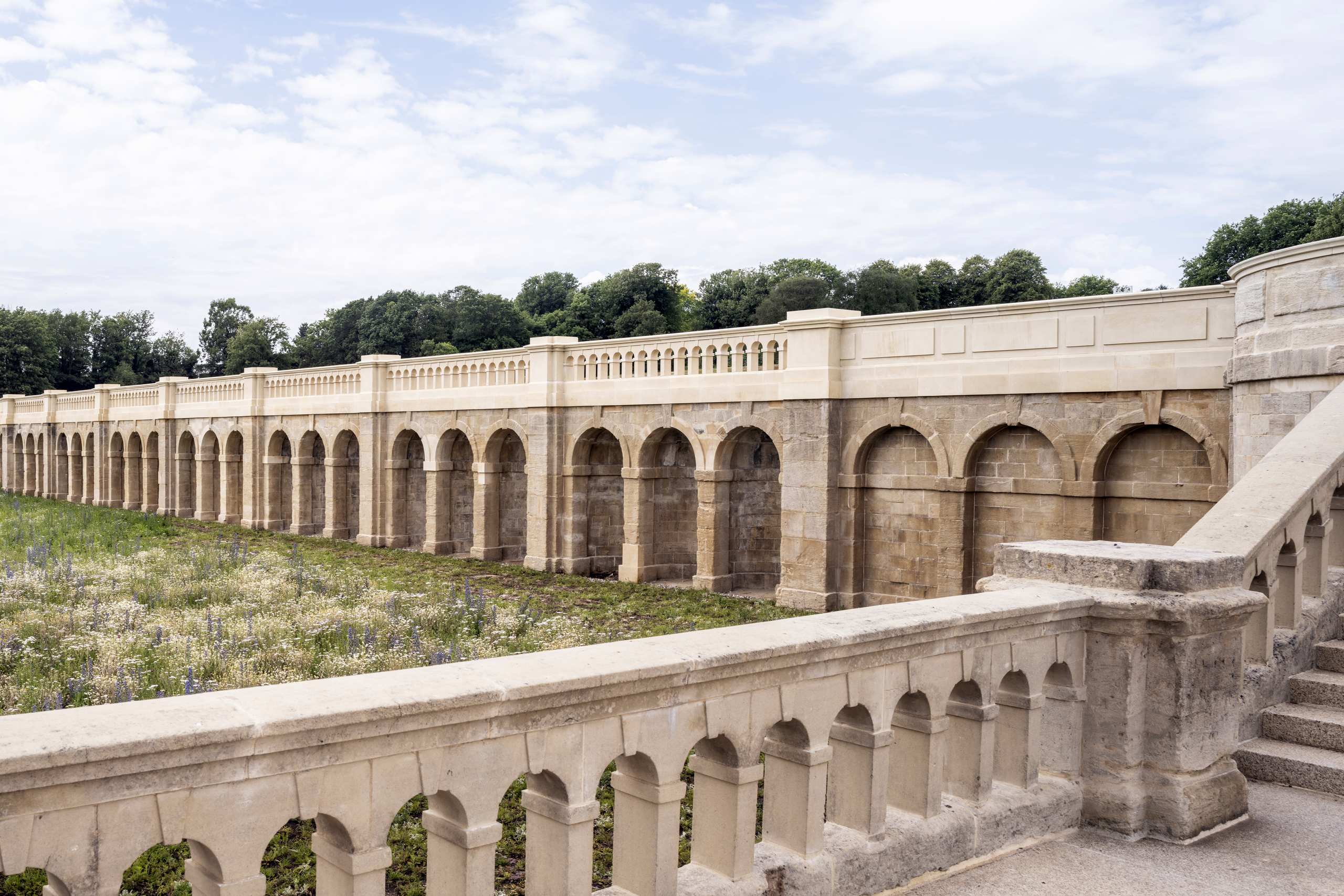
At the opposite end of the park,the half-kilometre-long Grade II listed Italian Terraces represent the last surviving element of Crystal Palace atits original monumental scale. Formerly an extensive landscape of ornamental gardens and fountains, they lost their function following the Palace’s destruction by fire in 1936 and have since experienced significant decline.
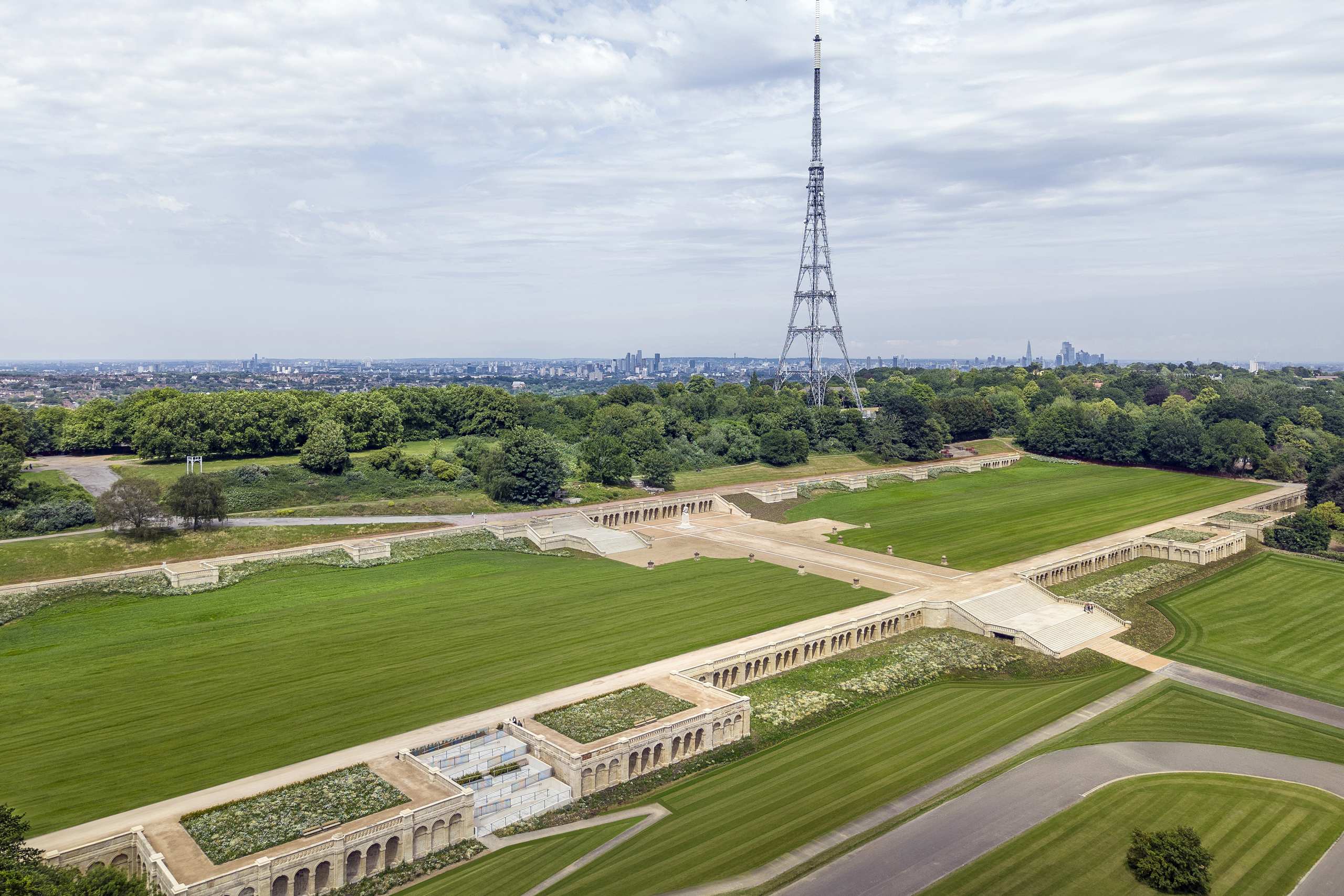
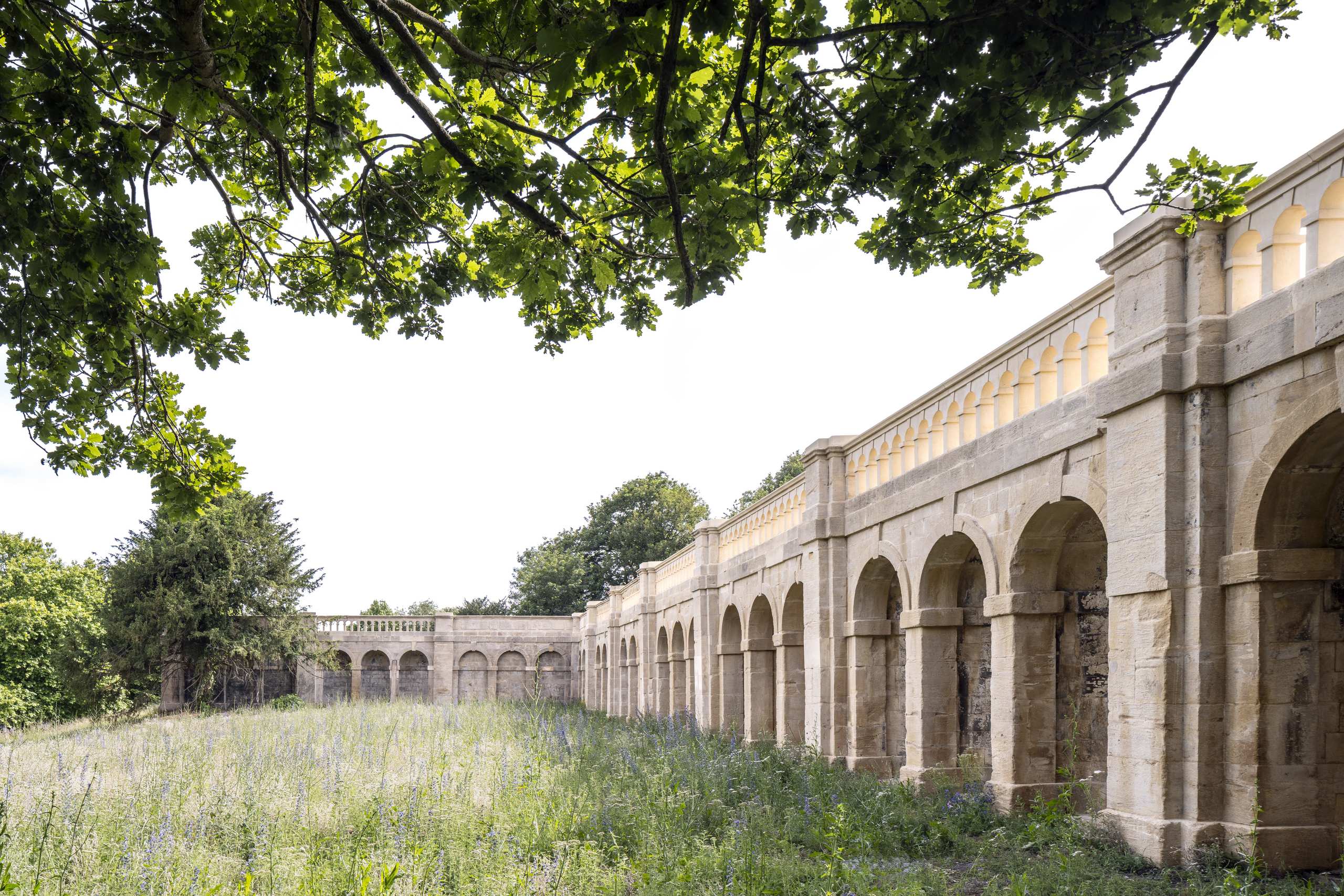
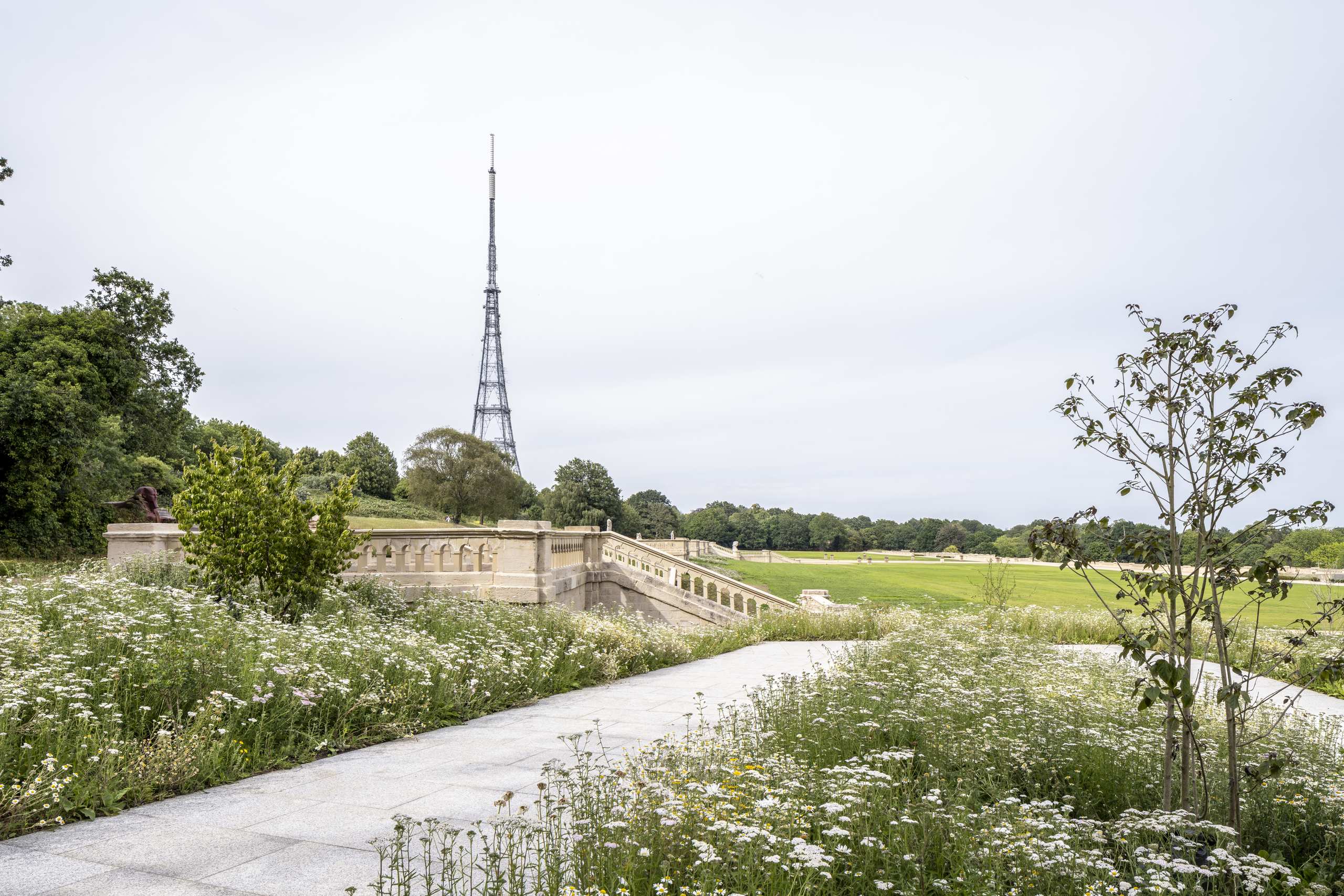
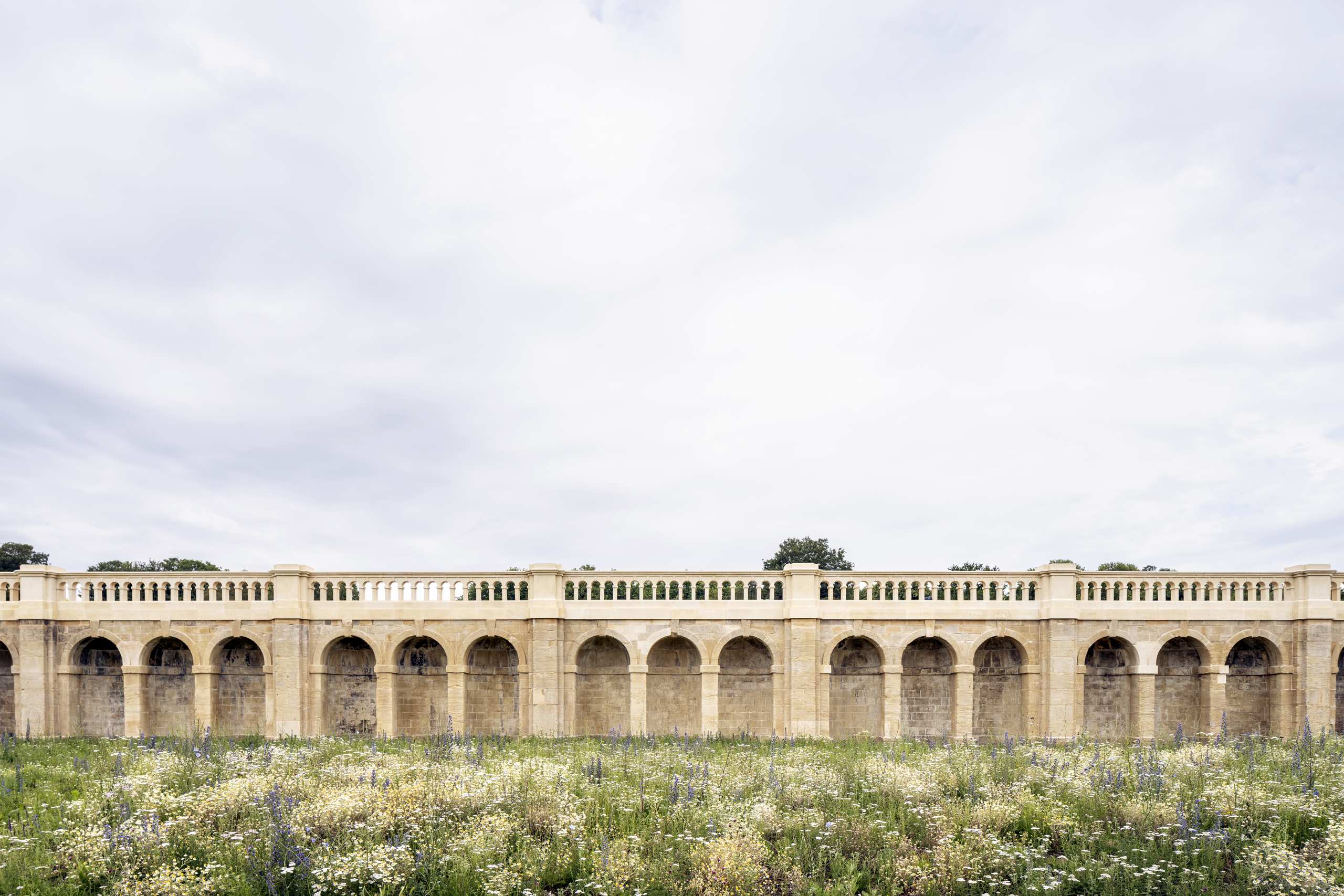
Invasive vegetation growing from the walls and hiding largeareas of the Terraces is removed, revealing archaeology. The restoration works reinstate all missing components of the Upper and Lower Terraces walls, including extensive balustrades and copings. Following consultation with Historic England, it was agreed that balustrades are reconstructed in cast stone, while the Terrace walls are repaired using matching Bath stone with lime mortar pointing. Over 1600 individual pieces of Bath stone and 2600 pieces of cast stone were used in the conservation process. Four terrace statues have been repaired adding tothe grandeur of the space: Psyche,Standing Lady, Turkey and Dante.
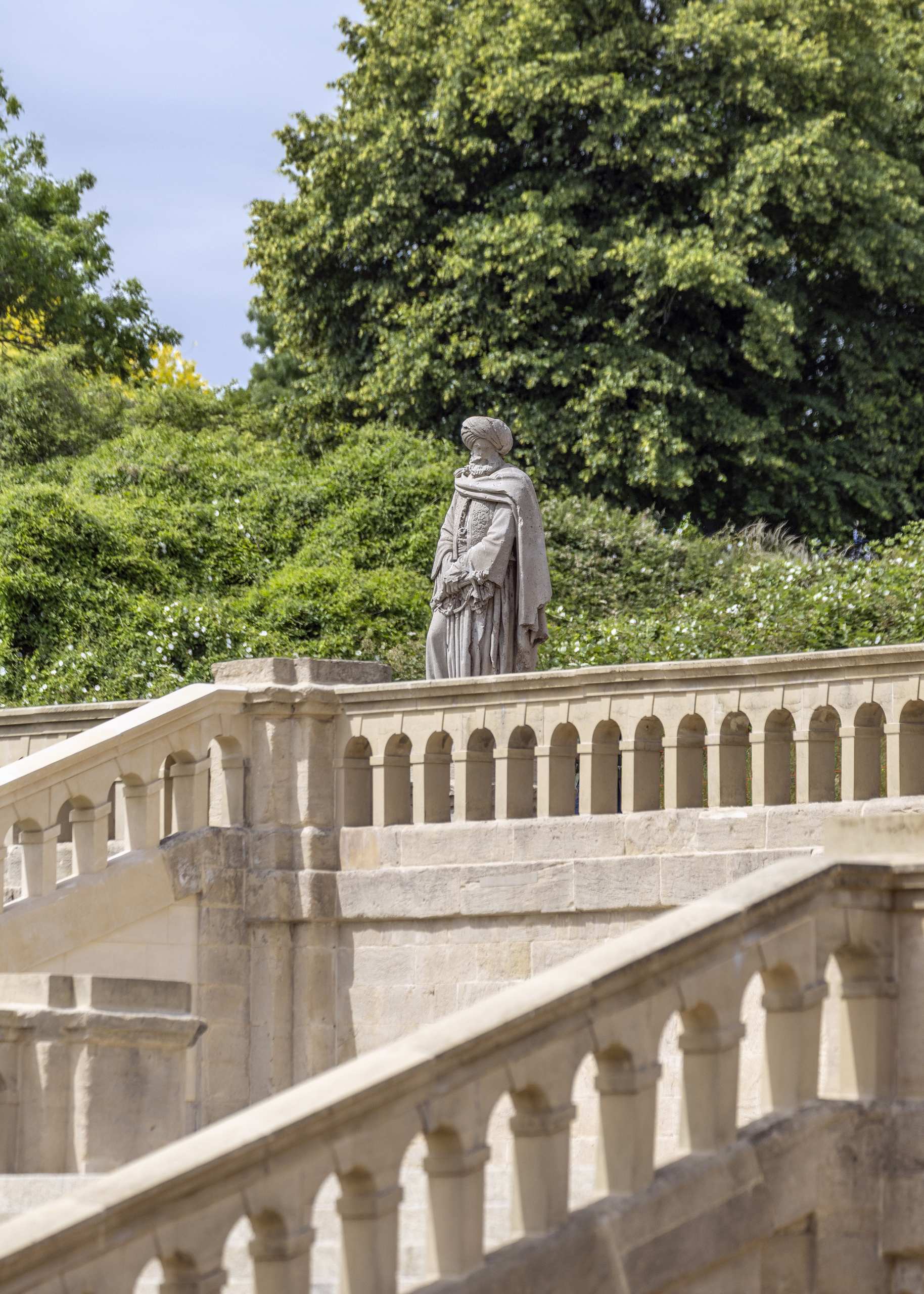
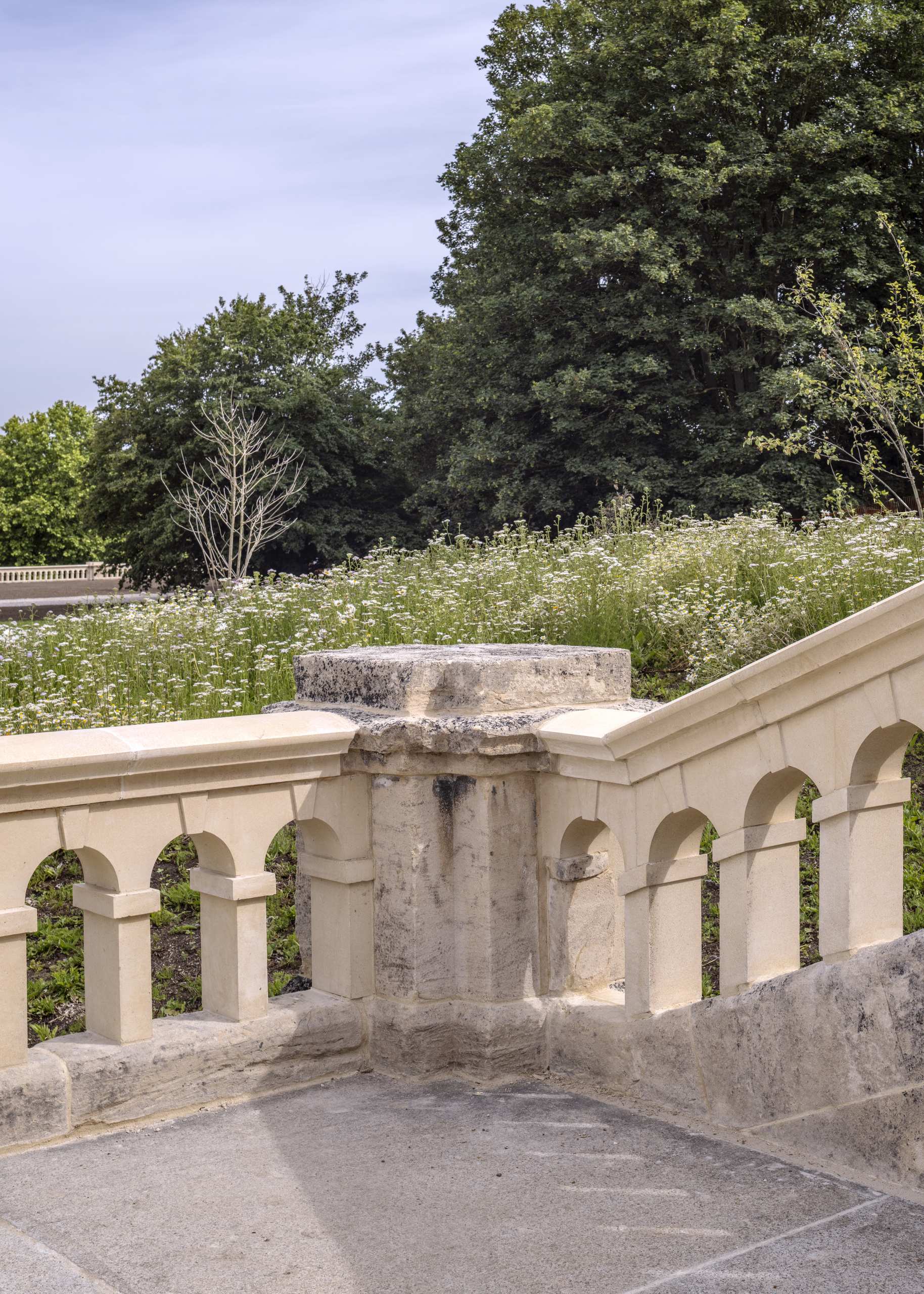
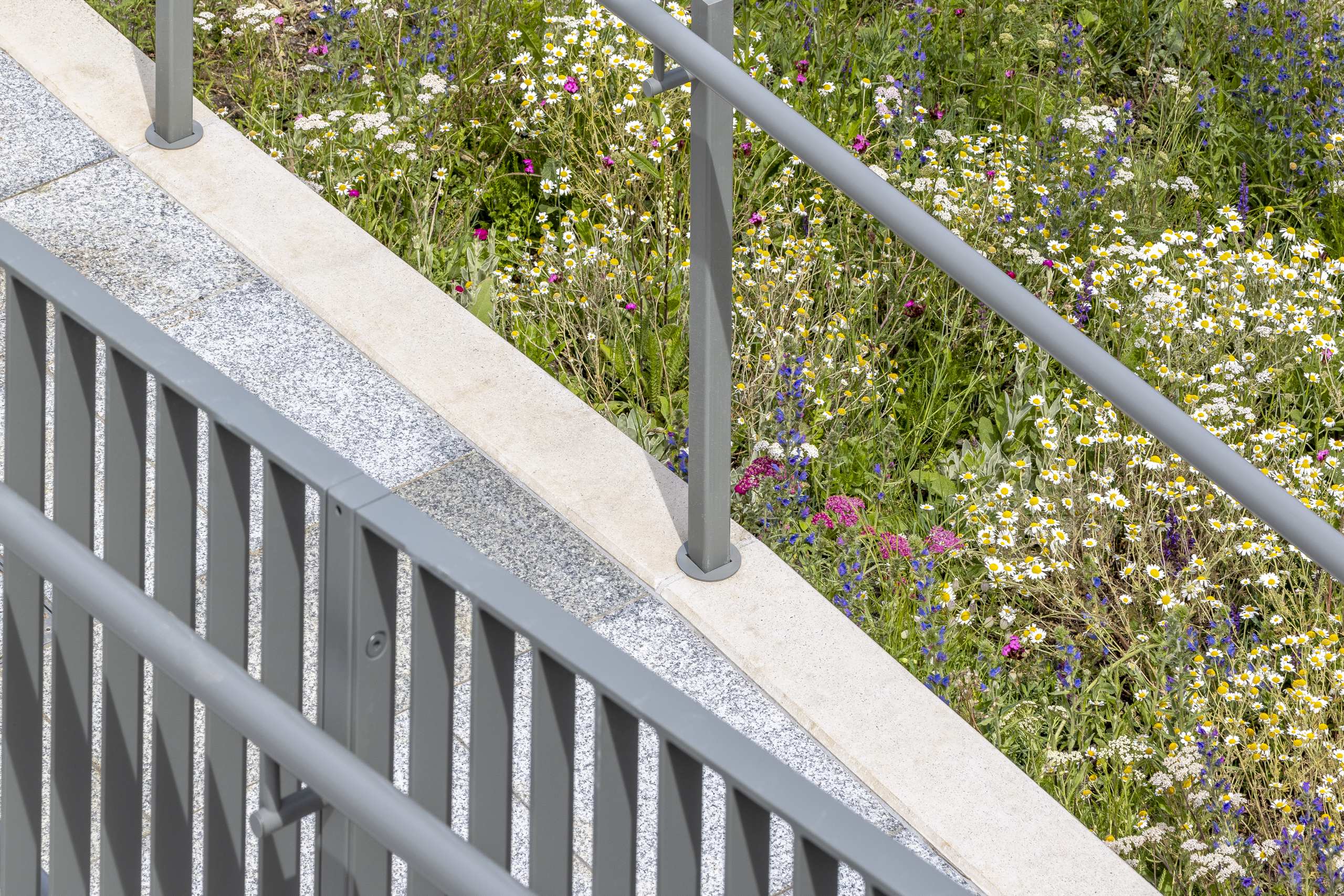
Intrusive fencing limiting access to the embankments along the Upper Italian Terrace walls is removed to reopen public access and views towards the South Downs. The legacy of Victorian horticultural innovation through contemporary meadow planting that attracts butterflies and supports biodiversity, creating a dynamic yet contextually sensitive landscape. New below ground drainage infrastructure is introduced to direct surface drainage away from the 170-year-old Terrace walls. The Italian Terraces are being reinstated as a key visitor destination, restoring a sense of their former grandeur and spectacle.
.jpg)
Grand Centre Walk
The Grand Centre Walk, Paxton’s primary spine unifying the park from the Tidal Lakes up to the Italian Terraces, had been significantly reduced and eroded over the years. The restoration returns this strong axial route to its original width of 96 ft (29.26 m) improving legibility, accessibility, and hierarchy.
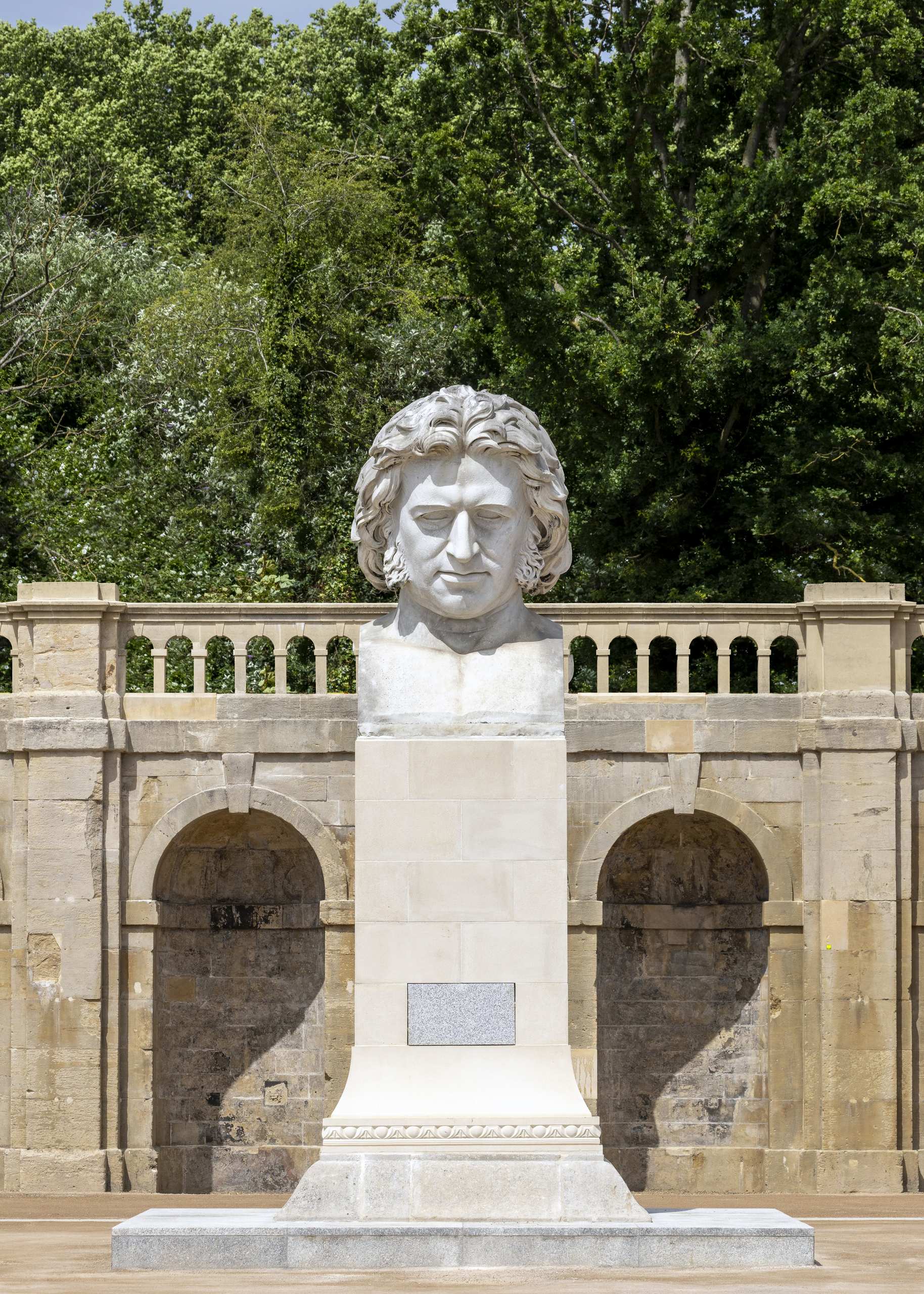
At the Tidal Lakes, the Walk is extended through flexible surfacing sensitively installed beneath London plane trees, using a specialist detail that prevents root compaction while quadrupling space for events and markets. On the Italian Terraces, the Walk’s prominence is further reinforced by the relocation of the Grade II listed bust of Sir Joseph Paxton. Positioned on the central axis, it has been reinstated in its original location, informed by the discovery of its historic concrete foundation uncovered during archaeological monitoring as part of the construction works.