Architecture

Velux Carbonlight Houses

What was the overarching philosophy of the project?

The overarching philosophy of the Model Home experiment is to place human comfort at the centre of zero carbon design. The design teams in each country have shared a common technical brief but each has interpreted it in the context of their own legislative framework and housing market. In the UK we have worked to create a home that addresses the evolution of the Code for Sustainable Homes while remaining relevant to the volume housing market. In common with many low and zero carbon designs the homes are super insulated, minimise thermal bridging and have high levels of air tightness to reduce the amount of heating they need. Each home then uses a combination of two renewable energy technologies for their main heat source (air source heat pumps and solar collectors) thus minimising the need for the use of non-renewable energy.
Velux Carbonlight Houses
No items found.

HTA worked with VELUX to involve a variety of local stakeholders including the Kettering planning and urban design team, local politicians and the North Northants Development Company (NNDC). The nature of the demonstration project meant that HTA were involved in consultation and detailed design with the projects other stakeholders who had new or innovative products that they wanted to demonstrate in the homes. Another important aspect of HTA’s role was explaining and illustrating the design and concepts at public events such as the Grand Designs Exhibition and Ecobuild, as well as explaining the principles to policy makers involved in sustainable construction.
Velux Carbonlight Houses
No items found.

The asymmetric design

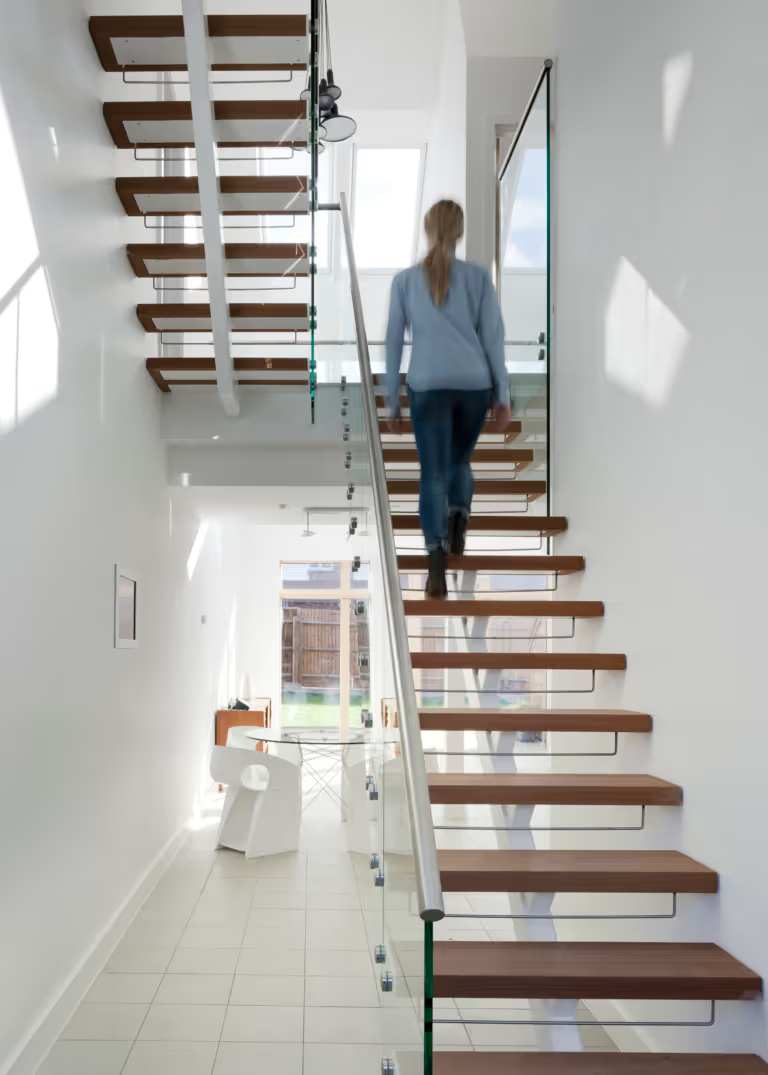
The external walls and the roof are both clad in timber shingles giving the building both individuality & simplicity. The warmth and renewable nature of timber shingles means that the environmental message is represented in the fabric of the home. The asymmetric design of the houses defines a strong frontage to the public realm while maximising light to the rear garden – allowing the occupants to enjoy a brighter space and to grow food on the micro-allotments. Natural ventilation is harnessed through triple-height spaces and a dual-aspect atrium which maximises the combined cross and stack ventilation of each home and avoids complex, mechanical ventilation and heat recovery systems. HTA’s scheme has been developed with the comfort of the end user in mind. Homes are organised around a central atrium that creates a bright, sun filled and naturally ventilated home that is healthy and enjoyable to live in.
No items found.