Sustainability & Building Physics

Sutton Estate

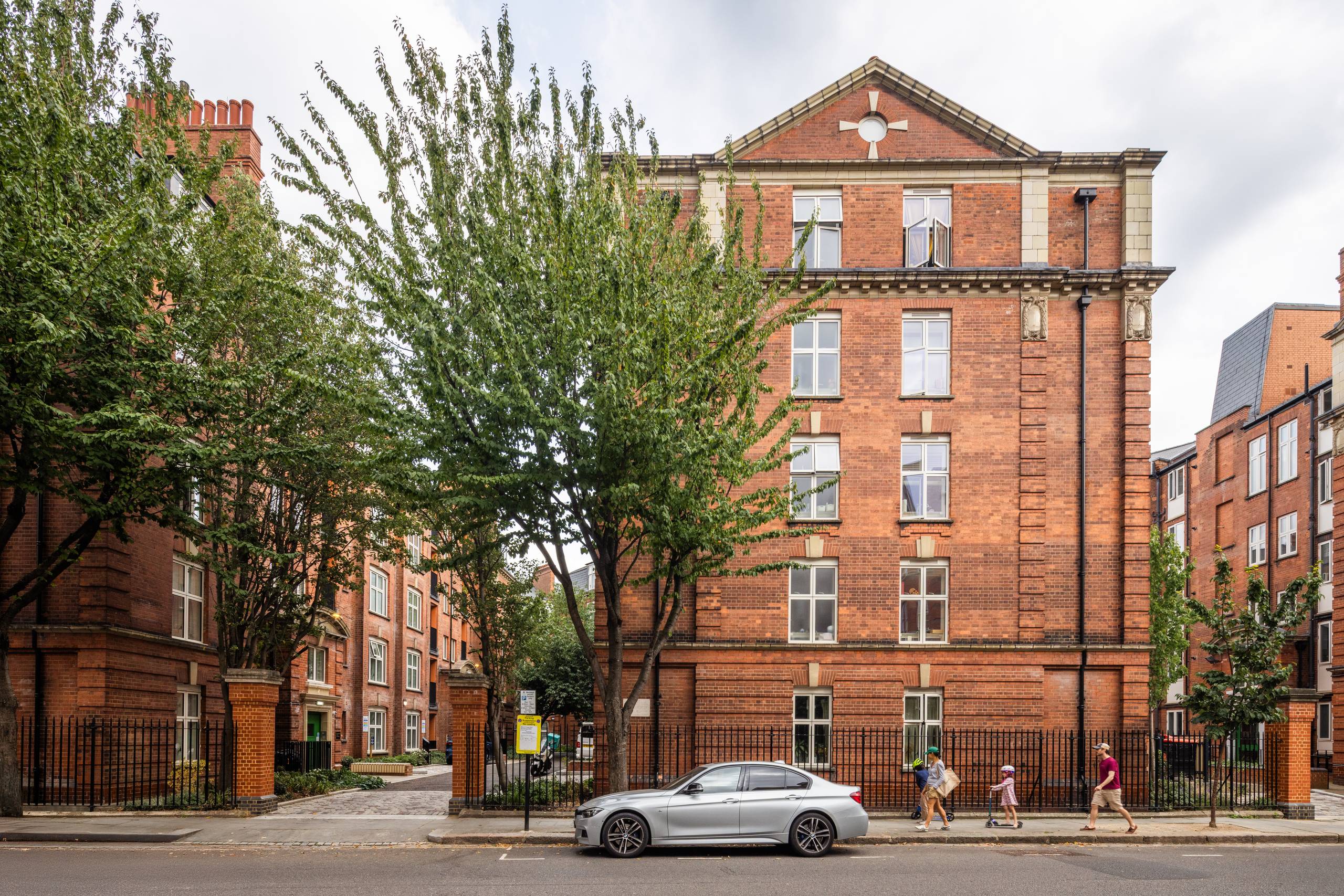
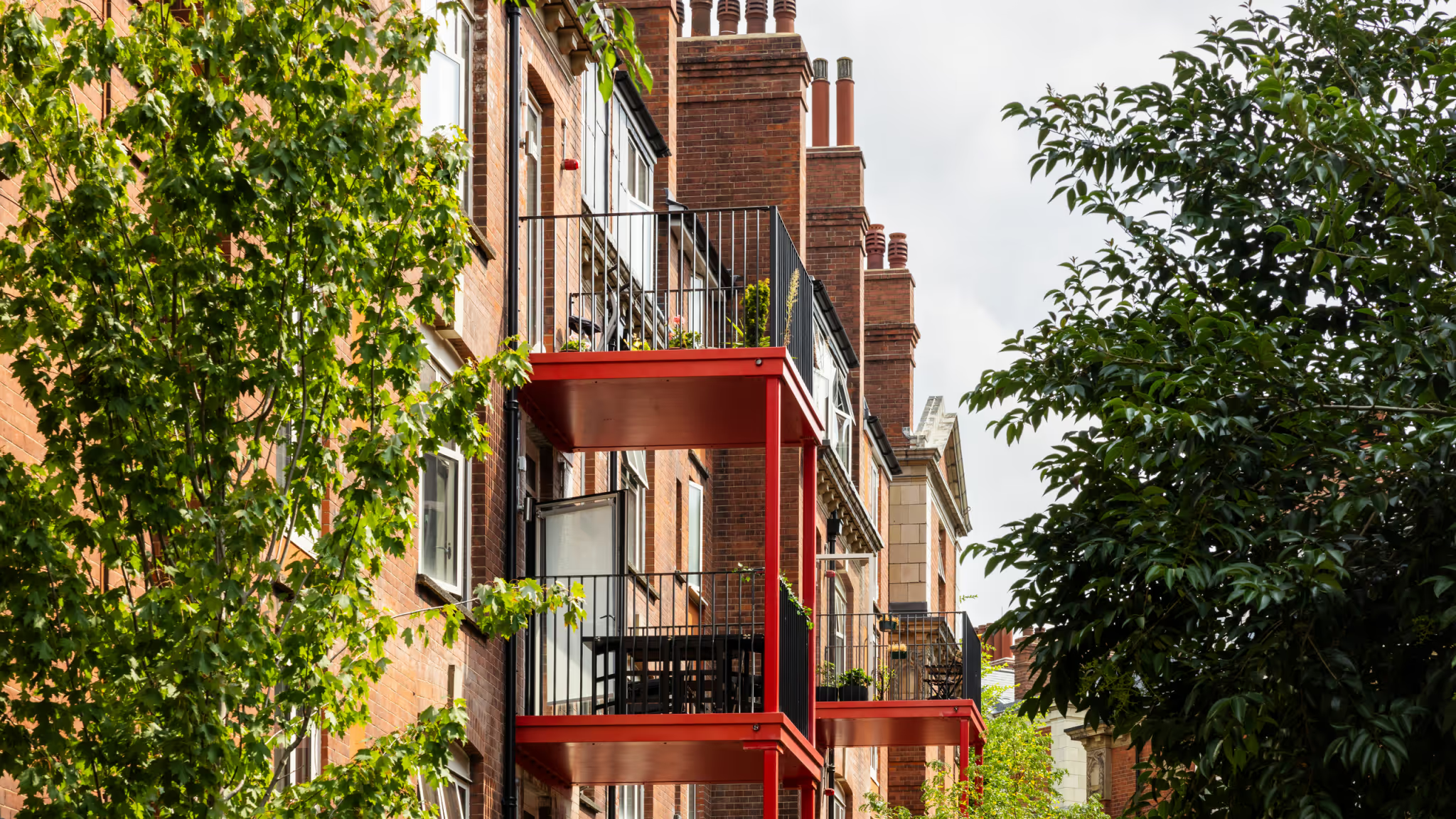
The sustainability approach at Sutton Estate is predicted to deliver a 75% reduction in energy consumption, a 73% cut in carbon emissions and a 57% reduction in heat loss across the estate. These achievements reflect a strategy focused on refurbishing the existing Edwardian buildings to secure their long-term future. This approach has an inherently low carbon footprint, as the embodied carbon is already locked into the original structures. By upgrading the fabric and layouts to modern standards, the project avoids the far higher emissions associated with demolition and rebuilding.
Sutton Estate
Sutton Estate
No items found.

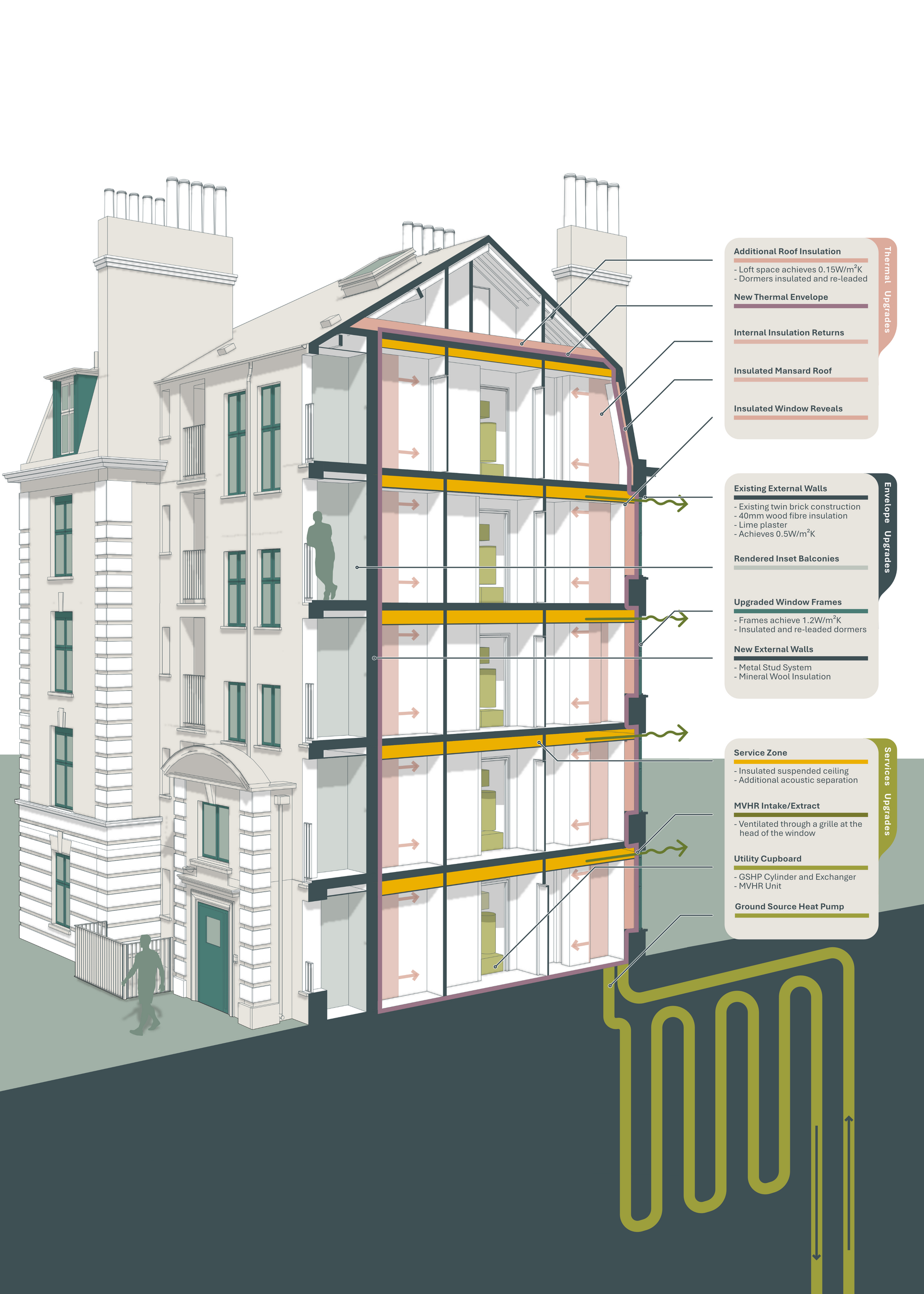
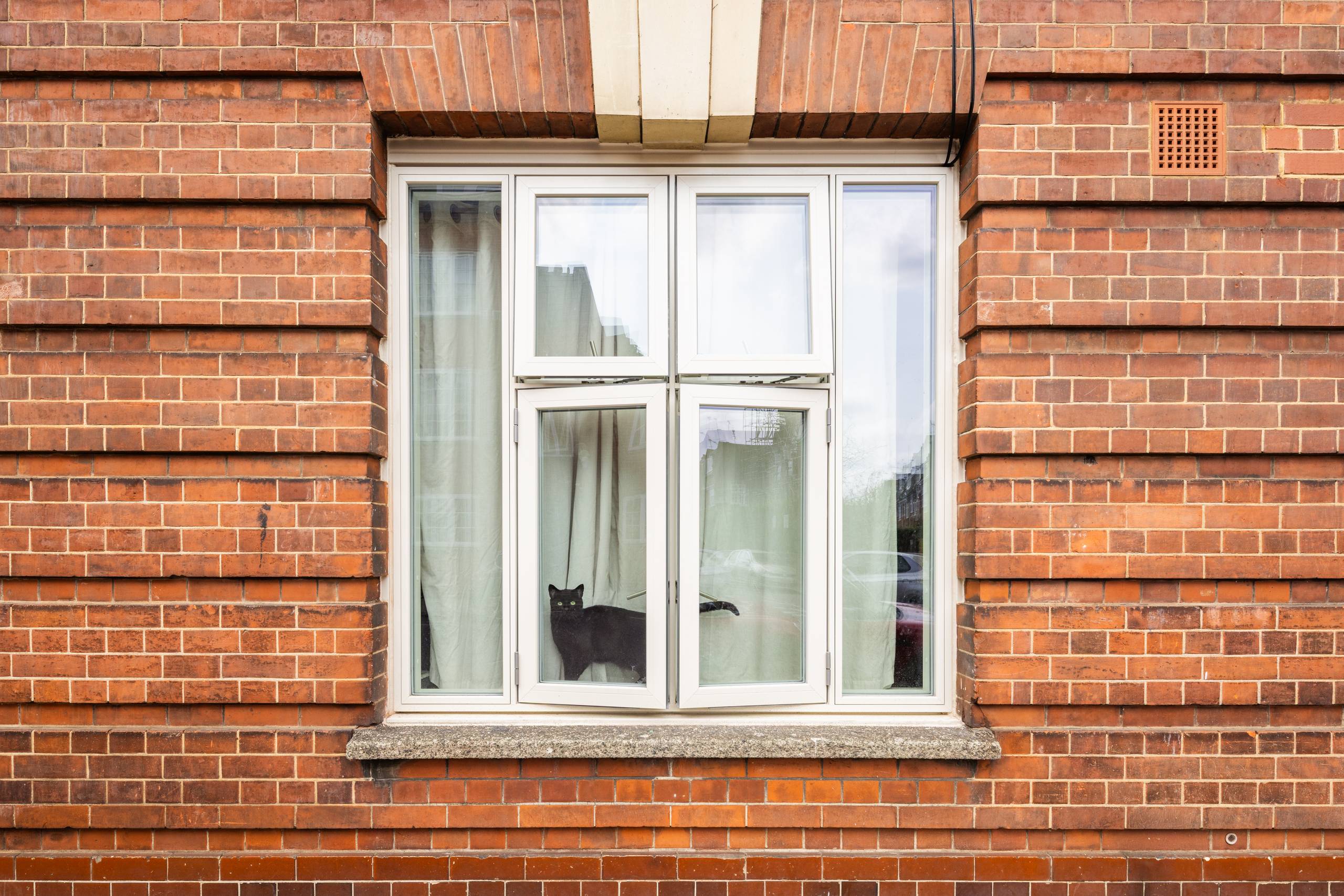
Our fabric-first approach prioritised thermal improvements to the existing buildings. Internal wall insulation was introduced to achieve optimum performance with minimal risk of interstitial condensation, resulting in a U-value of 0.5 W/m²K. New double-glazed casement windows improve ventilation, daylight and ease of cleaning, while enhanced airtightness reduces heat loss. These measures are designed to meet the RIBA 2030 Climate Challenge targets, significantly lowering operational energy and carbon emissions. Water-saving measures include low-flow sanitary fittings, efficient appliances and recycling strategies to limit consumption.
Sutton Estate
Sutton Estate
Sutton Estate
No items found.

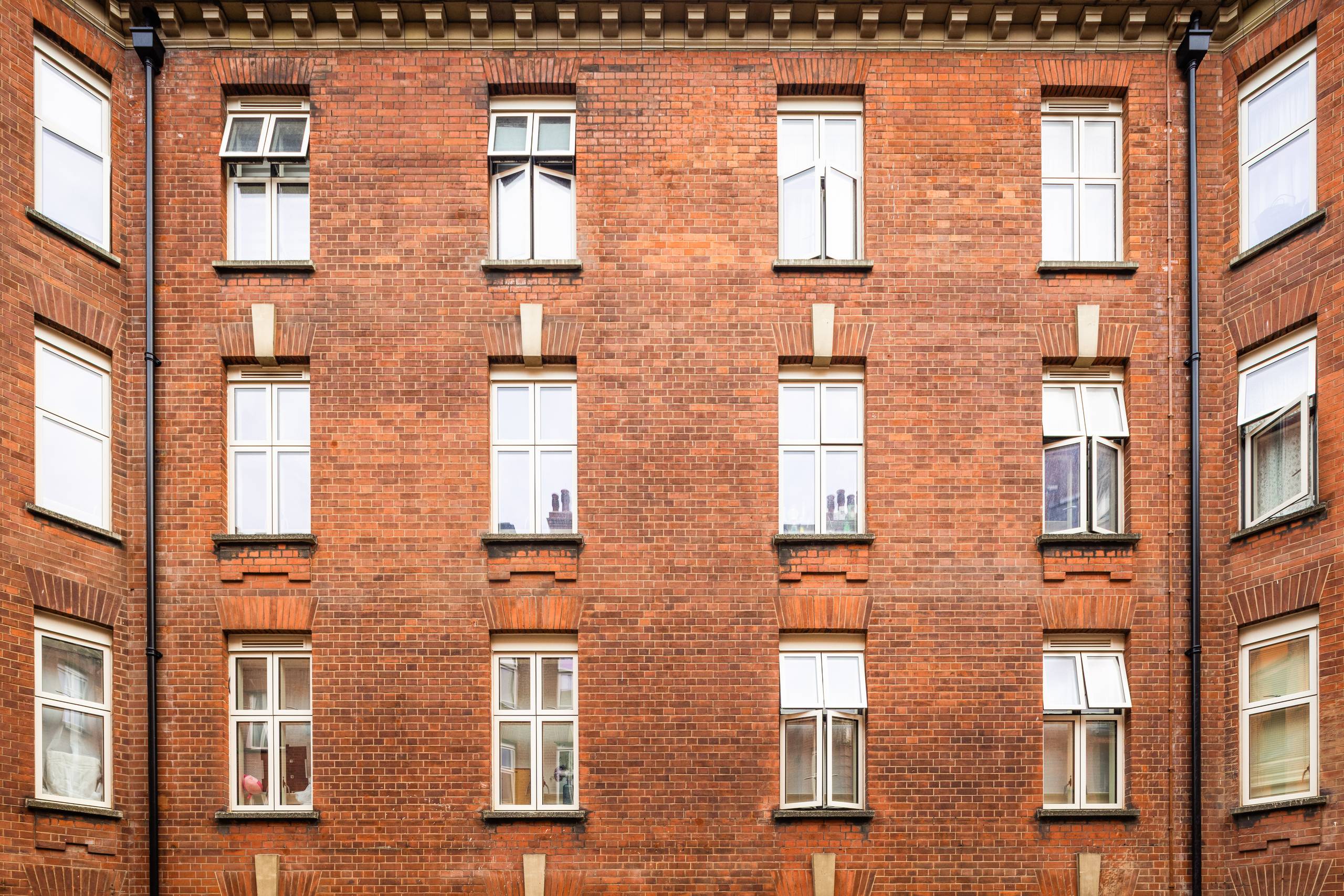
Materials were selected for their low embodied carbon, durability and contribution to circular economy principles, with emphasis on reuse, recycled content and local sourcing. Deconstruction works provided reclaimed bricks to repair damaged façades, many marked by disused gas boiler flues. Retaining and repairing the original brickwork and faience reduced demand for new materials, while historic terracotta was restored by local specialists Darwen Terracotta to preserve the estate’s Edwardian character. New aluminium-framed windows were chosen for their recyclability, low maintenance and colour-matched finishes, combining heritage with sustainability and lifecycle performance.
No items found.

As part of the wider sustainability strategy, the energy system demonstrates the feasibility of ground source heat pumps in dense urban sites while providing affordable energy for historic buildings. Working with specialist Kensa, we installed 27 boreholes drilled to a depth of 200m, connected via a shared underground manifold to individual Shoebox heat pumps in each flat. Using the ground’s consistent temperature, the system delivers hot water and space heating quietly and efficiently, with zero on-site emissions. Alongside its environmental benefits, the system brings significant cost savings for residents. Annual running costs range from £301 for a one-bedroom flat to £712 for a four-bedroom home, averaging £441 per property (based on a 24.5p/kWh unit electricity price, 2025 data from Kensa).
No items found.